
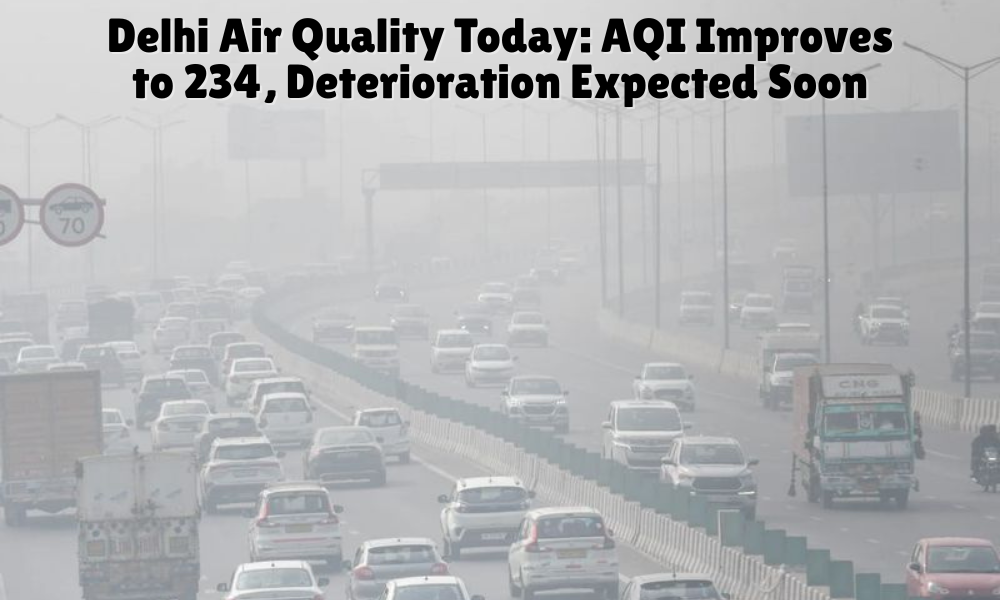
After weeks of fluctuating pollution levels and public health concerns, Delhi witnessed a temporary improvement in air quality as the Air Quality Index (AQI) dropped to 234, placing it in the ‘poor’ category. While this marks a relief from the frequent ‘very poor’ and ‘severe’ levels experienced earlier, experts and authorities have warned that the improvement may be short-lived, with a deterioration likely in the coming days due to unfavorable meteorological conditions and rising local pollution sources.
A Brief Respite for the Capital
The decline in AQI to 234 brought cautious optimism among residents, especially those vulnerable to air pollution such as children, senior citizens, and people with respiratory ailments. Visibility improved marginally, and the heavy smog that often blankets the city appeared thinner in several areas. Morning walkers and commuters reported slightly easier breathing conditions compared to previous days when AQI levels hovered closer to the ‘very poor’ range.
Environmental experts attribute this improvement largely to stronger surface winds and better atmospheric dispersion, which helped pollutants spread out instead of remaining trapped close to the ground. Occasional changes in wind direction also played a role in reducing the concentration of fine particulate matter such as PM2.5 and PM10.
Understanding AQI 234: Still a Cause for Concern
Despite the improvement, an AQI of 234 is far from safe. According to air quality standards, the ‘poor’ category can still cause breathing discomfort to most people on prolonged exposure, and those with asthma, heart disease, or other lung conditions may experience more severe symptoms.
Doctors in Delhi continue to advise residents to limit outdoor activities, especially during early mornings and late evenings when pollution levels tend to spike. The use of masks, air purifiers indoors, and preventive healthcare measures remains strongly recommended.
Why Air Quality Improved
Several factors contributed to the temporary improvement in Delhi’s air quality:
- Meteorological Conditions: Increased wind speed helped disperse pollutants.
- Slight Rise in Temperature: Warmer daytime temperatures reduced inversion layers that trap pollutants.
- Reduced Local Emissions for Short Periods: In some areas, reduced traffic movement and better compliance with pollution control measures contributed marginally.
However, experts emphasize that these are short-term factors, and unless structural issues are addressed, pollution levels are bound to rise again.
Deterioration Likely in Coming Days
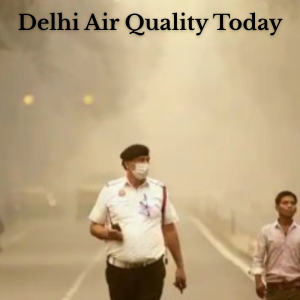
Air quality forecasters have warned that Delhi’s AQI may worsen again due to calmer winds, lower temperatures, and the return of unfavorable weather conditions. As winter deepens, temperature inversion becomes more frequent, preventing pollutants from dispersing and causing them to accumulate near the surface.
In addition, local pollution sources such as vehicular emissions, construction activities, road dust, and biomass burning continue to operate at high levels. Although stubble burning incidents in neighboring states have reduced compared to peak periods, their residual impact, combined with Delhi’s own emissions, can quickly push AQI levels back into the ‘very poor’ category.
Vehicular Emissions Remain a Major Contributor
Traffic congestion remains one of the largest contributors to Delhi’s air pollution. With millions of vehicles on the road, emissions from diesel and petrol engines significantly increase levels of nitrogen dioxide and particulate matter. While measures such as odd-even schemes and promotion of electric vehicles have shown some impact in the past, experts believe more consistent and long-term solutions are required.
Public transport usage, carpooling, and remote work options are being encouraged as ways to reduce daily emissions, especially during high-pollution periods.
Government Measures and Emergency Actions
The Delhi government and central authorities continue to monitor air quality closely. Pollution control measures under the Graded Response Action Plan (GRAP) are implemented based on AQI levels. These include restrictions on construction activities, regulation of diesel generator use, and advisories for schools and offices.
Authorities have stated that if AQI levels rise sharply, stricter measures may be reintroduced, including temporary bans on certain activities and enhanced enforcement against polluting vehicles and industries.
Health Advisory for Residents
Health experts stress that even during periods of relative improvement, precautions should not be relaxed. Prolonged exposure to polluted air can lead to chronic respiratory diseases, reduced lung function, cardiovascular issues, and weakened immunity.
Residents are advised to:
- Avoid outdoor exercise during peak pollution hours
- Use masks that can filter fine particles
- Keep windows closed during high AQI periods
- Stay hydrated and maintain a healthy diet to boost immunity
Parents are particularly urged to monitor children for symptoms such as coughing, eye irritation, or breathlessness.
The Larger Environmental Challenge
Delhi’s air pollution problem is not a one-day or one-season issue. It is the result of urbanization, rising population, dependence on fossil fuels, and inadequate waste management. While short-term weather-driven improvements offer temporary relief, sustainable solutions lie in long-term policy changes, cleaner energy adoption, and public participation.
Experts advocate for expanding green cover, strengthening public transport infrastructure, transitioning to renewable energy, and strict enforcement of emission norms across sectors.
Looking Ahead
The current drop in AQI to 234 serves as a reminder that improvement is possible—but fragile. Without consistent efforts and favorable weather, Delhi’s air quality can deteriorate rapidly. Authorities, citizens, and industries must work together to ensure that clean air is not just an occasional relief but a lasting reality.
As forecasts suggest a possible decline in air quality in the coming days, vigilance remains crucial. For now, Delhi breathes a little easier—but the battle against air pollution is far from over.