Iron is a small mineral with a big responsibility. It plays a vital role in carrying oxygen throughout the body, supporting metabolism, and maintaining overall energy levels. When iron levels drop, the body often sends clear signals persistent fatigue, weakness, dizziness, pale skin, headaches, and difficulty concentrating. In today’s fast-paced lifestyle, iron deficiency has become increasingly common, especially among women, growing children, athletes, and people following restrictive diets.
The good news is that boosting iron levels doesn’t always require drastic measures. With the right combination of diet, hydration, activity, and medical guidance, you can naturally support your body’s iron needs and feel more energetic day by day. Let’s explore practical, science-backed ways to increase iron levels and reduce fatigue.
Understanding Why Iron Matters
Iron is a key component of hemoglobin, the protein in red blood cells that transports oxygen from the lungs to every part of the body. Without enough iron, your body cannot produce sufficient healthy red blood cells, leading to iron deficiency anemia. Even mild deficiency—before anemia develops can cause noticeable tiredness and reduced stamina.
Iron also supports immune function, brain health, and muscle metabolism. This means that low iron doesn’t just make you tired; it can also lower your resistance to infections and affect mental clarity.
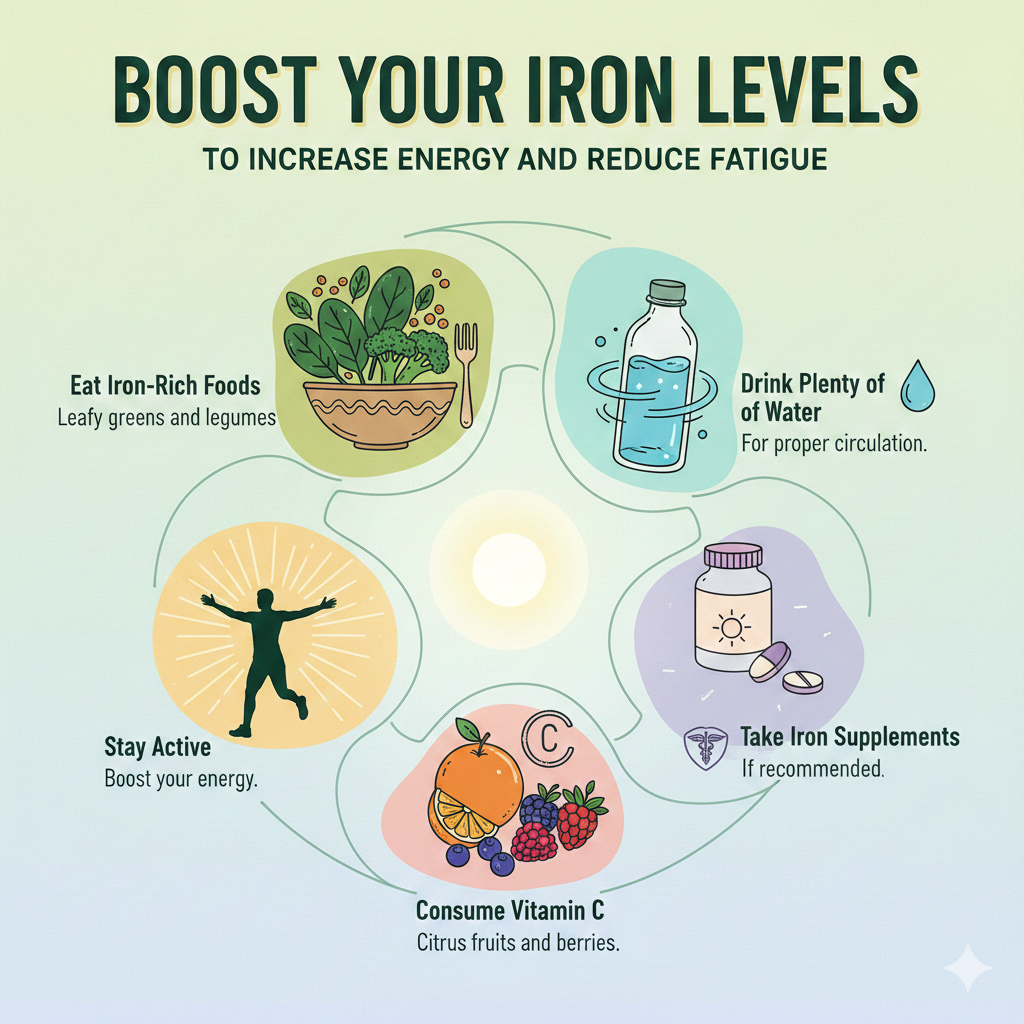
Eat Iron-Rich Foods Daily
The most effective and natural way to increase iron levels is through your diet. Iron comes in two forms:
- Heme iron, found in animal-based foods, is absorbed more efficiently by the body.
- Non-heme iron, found in plant-based foods, is still valuable but absorbed at a lower rate.
Some excellent iron-rich foods include:
- Leafy green vegetables like spinach, kale, and fenugreek
- Legumes such as lentils, chickpeas, kidney beans, and soybeans
- Whole grains like millets, quinoa, and fortified cereals
- Nuts and seeds, especially pumpkin seeds, sesame seeds, and almonds
- Dried fruits like dates, raisins, and apricots
- Animal sources such as red meat, liver, eggs, fish, and poultry
For those following vegetarian or vegan diets, careful meal planning is especially important to meet daily iron requirements.
Pair Iron with Vitamin C
One of the simplest yet most overlooked tips for improving iron absorption is consuming vitamin C along with iron-rich foods. Vitamin C converts iron into a form that is easier for the body to absorb, particularly non-heme iron from plant sources.
Add these vitamin C-rich foods to your meals:
- Oranges, lemons, and sweet lime
- Amla (Indian gooseberry)
- Strawberries, blueberries, and raspberries
- Tomatoes and bell peppers
- Guava and kiwi
For example, squeeze lemon juice over cooked spinach, have fruit with your meals, or include a fresh salad alongside lentils. These small changes can significantly improve iron uptake.
Stay Well Hydrated
While water does not directly contain iron, proper hydration plays an important role in circulation and overall energy levels. Drinking enough water helps maintain healthy blood volume and supports efficient nutrient transport throughout the body.
Dehydration can worsen feelings of fatigue and weakness, which may already be present with low iron levels. Make it a habit to sip water regularly throughout the day, especially in hot climates or during physical activity.
Stay Active But Balanced
It might seem counterintuitive, but regular physical activity can help combat fatigue associated with low iron. Light to moderate exercise improves blood circulation, enhances oxygen delivery to tissues, and boosts overall energy and mood.
Activities such as walking, yoga, stretching, cycling, or light strength training can be beneficial. However, excessive or intense exercise without adequate nutrition may worsen iron deficiency, especially in endurance athletes. The key is balance—listen to your body and rest when needed.
Be Mindful of Iron Blockers
Certain foods and beverages can interfere with iron absorption if consumed alongside iron-rich meals. These include:
- Tea and coffee (due to tannins)
- Calcium-rich foods or supplements taken at the same time
- Excessive intake of bran or high-fiber foods in a single meal
This doesn’t mean you need to avoid these completely. Simply try to consume tea, coffee, or calcium supplements at least one to two hours away from iron-rich meals.
Consider Iron Supplements Only If Recommended
In some cases, dietary changes alone may not be enough, especially if iron deficiency is severe or long-standing. Iron supplements can be effective, but they should only be taken under medical supervision.
Excess iron can be harmful and may cause side effects such as nausea, constipation, stomach pain, or even organ damage if taken unnecessarily. A blood test is the best way to determine whether supplementation is required and in what dosage.
Recognize Early Warning Signs
Early detection of low iron levels can prevent more serious complications. Common warning signs include:
- Persistent tiredness even after rest
- Shortness of breath during routine activities
- Frequent headaches or dizziness
- Brittle nails or hair fall
- Cold hands and feet
- Reduced immunity
If you notice these symptoms, especially if they persist, it’s wise to consult a healthcare professional for evaluation.
Special Focus: Women and Iron Needs
Women are particularly prone to iron deficiency due to menstrual blood loss, pregnancy, and breastfeeding. Adolescent girls and pregnant women have higher iron requirements and should pay close attention to diet and medical guidance.
Including iron-rich foods from an early age and regular health check-ups can go a long way in preventing deficiency.
Building Sustainable Daily Habits
Boosting iron levels is not about quick fixes—it’s about consistent, sustainable habits. A well-balanced diet, smart food combinations, adequate hydration, moderate activity, and timely medical advice together form a strong foundation for long-term health.
By making small but mindful changes to your daily routine, you can support your body’s iron levels, improve energy, and reduce fatigue naturally.
Conclusion
Iron is essential for vitality, strength, and overall well-being. When iron levels are balanced, the body functions more efficiently, energy improves, and daily tasks feel easier. Whether through nutrient-rich foods, vitamin C pairing, hydration, or professional guidance, boosting iron levels is achievable with informed choices.
Listen to your body, nourish it wisely, and remember—sustained energy starts from within.