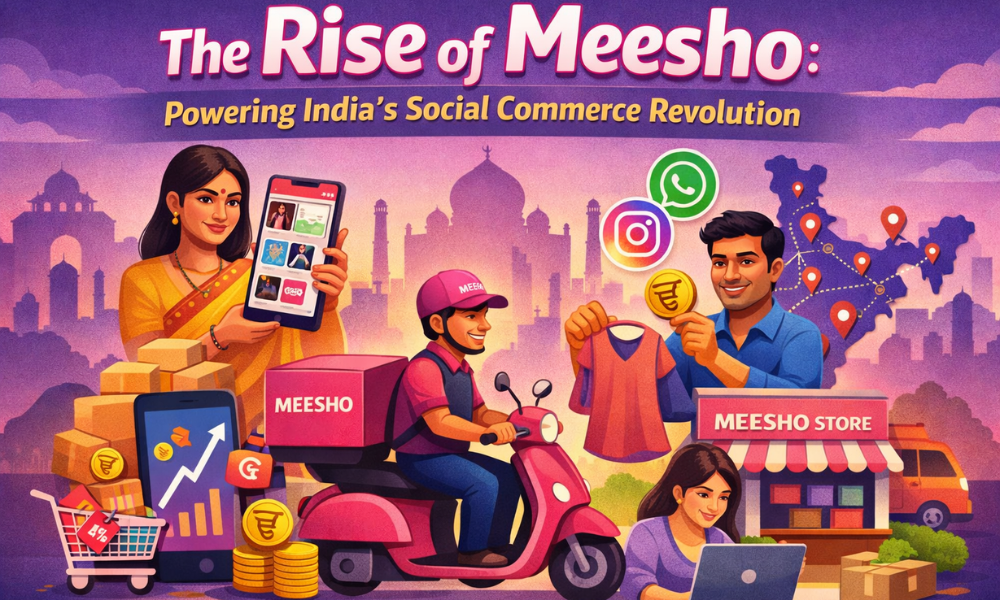
India’s e-commerce space has seen a significant change in the form of social commerce, and Meesho has been right at the core of it. What started off as an easy marketplace for suppliers and re-sellers to access has now turned into something which can be called the engine for entrepreneurship in India. With the help of social media sites, Meesho has managed to change the e-commerce space in India, and what we see here is the story of the digital revolution that has been unfolding in Tier 2 and Tier 3 cities across India.
From Startup to Unicorn: The Founding Story of Meesho
It was founded in 2015 by Vidit Aatrey and Sanjeev Barnwal with the very powerful concept of enabling every individual to run a business through social media. Though it was initially designed as a platform for fashion boutiques to run their businesses through WhatsApp and Facebook, the entrepreneurs eventually changed its direction to become more aligned with the concept of enabling resellers, as observed during the initial interactions. After realizing the enormous gap in the ecommerce landscape, where there were millions of people willing to run their own online selling businesses but lacked either the necessary funds, products, or requisite knowledge, the founders of Meesho made the conceptual shift that helped them create a new segment of entrepreneurs. Today, due to the funding received from global investors such as SoftBank, Meta, and Sequoia Capital, the company has achieved the coveted status of a unicorn.
Targeting Entrepreneurs: Supporting Resellers
Meesho’s objective of Creating Entrepreneurship as an Accessible Option for Everyone in India is the Basis of its Successful Journey to Date as a Marketplace That Empowers Users, Particularly Women, to Resell Products with No Upfront Capital Investment. Users Can Browse Thousands of Products, Promote Them on Social Media Platforms, Set Their Own Profit Margins, and Collect Their Profit When They Receive Payment for a Purchase of Products by Customers Who Have Placed Orders With Them Through Their Marketplace.
Democratising Entrepreneurship: Empowering Millions of Resellers
This Zero Risk Business Model Is Encouraging Millions of First Time Entrepreneurs Living In India Who Have Little Access To Employment Opportunities Or Job Opportunities To Become Entrepreneurs.
The Support Provided to Sellers by Meesho in Terms Of Training, Support and Assistance with Logistics and Payment Processing Makes Becoming a Seller in Its Reseller Marketplace an Easy and Seamless Process for Non-Tech Savvy Individuals.
By Empowering People Living In Tier-2, Tier-3 and Rural Communities With The Opportunity to Generate Additional Income, Meesho Is Building An Inclusive Digital Economy For 21st Century India. Meesho’s reseller marketplace creates a source of income for its resellers and gives them a sense of accomplishment, financial independence and entrepreneurial skills that will serve them well into the future.
Social Commerce at Scale: WhatsApp, Instagram & Tier-2/Tier-3 India
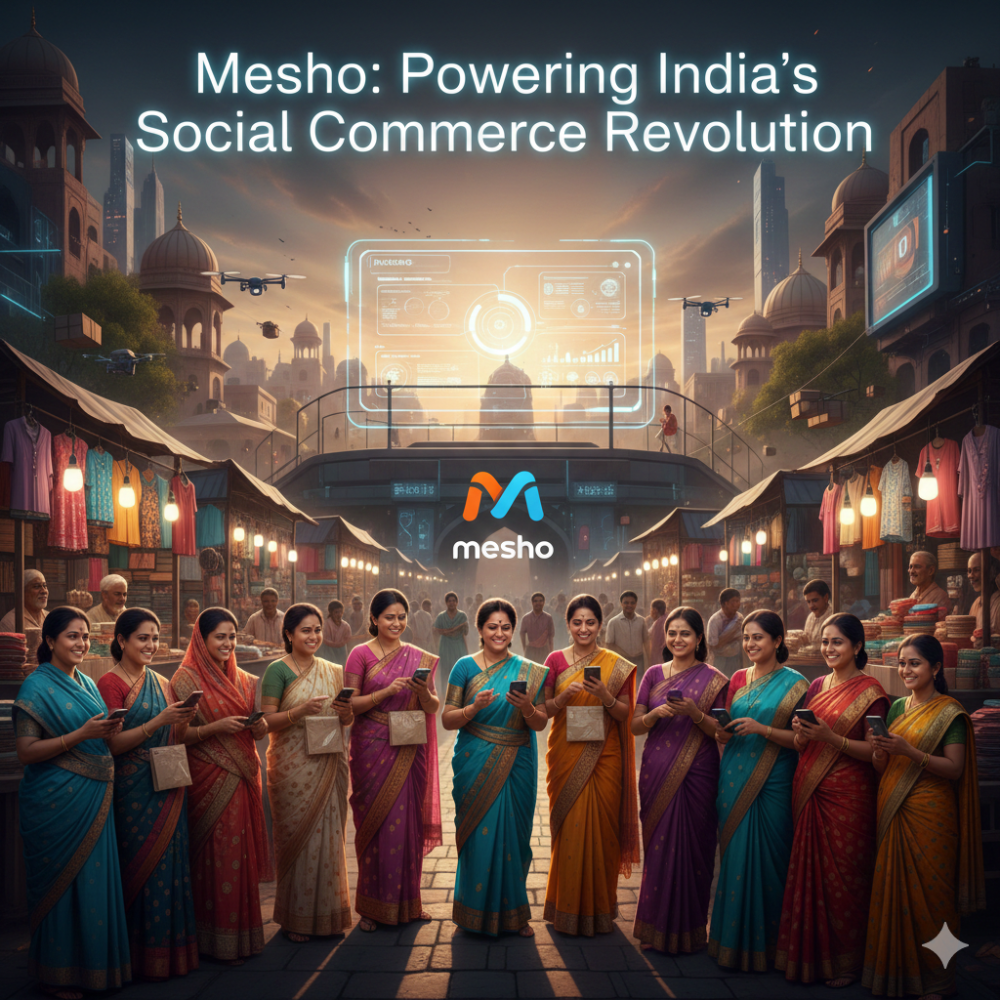
The Largest Innovation from Meesho is to use Social Media as a Sales Channel rather than to Compete with Traditional E-Commerce Platforms. Meesho is not focusing primarily on Search-Based Buying; instead, Meesho’s Model is to Enable Discovery of Products on WhatsApp, Facebook, and Instagram. These are already Very Commonly Used by Every Day Indians. The Model Using Social Media Works Great for Tier-2 & Tier-3 Cities because Trust in Those Cities is Primarily Created through Networks of Personal Relationships or Recommendations Made by Your Friends and Family Members. Meesho’s Focus on Geographic Regions, Languages, Affordable Prices, & Local Preferences Enables Them to Have Greater Market Penetration Than Their Competitors in Non-Metro Areas. Meesho’s Use of a Social-First Strategy Helps Reduce Customer Acquisition Costs While Increasing Customer Engagement & Trust and has Proven to be a Scalable Business Model in Terms of Reaching the Millions of Users in these Regions without Spending Lots of Money on Marketing. Overall, Meesho has Significantly Altered E-Commerce Processes in Markets Focused on Bharat.
Logistics, Technology, & Trust are the three pillars of Meesho’s growth.
The technology and the logistics at Meesho underpin the company’s simple user experience; this is a world-class logistics and technology platform, with lots of investment in Artificial Intelligence (AI), including product recommendation engines, pricing algorithms, and seller analytics to increase conversions and improve customer satisfaction.
The logistics of Meesho are critical to its success by building and optimizing a low-cost supply chain that is designed for high-volume, low-value orders. Features that support building trust among first-time online shoppers include having the ability to return easily, cash-on-delivery, and provide transparency in tracking orders that have been placed.
Quality Control and Seller Ratings provide the foundation for consistency across the Meesho marketplace. Offering combinations of technology and operational efficiencies has allowed Meesho to become competitive with larger, established e-commerce players, while at the same time serving an entirely different market segment.
The back-end of Meesho ultimately allows for scalability; thus, trust and reliability are as important as innovation in India’s digital commerce ecosystem.
Conclusion
Meesho’s achievement is more than just the rise of a new company; it is a change in the very fabric of how commerce is conducted in the country. As a company that leverages technology and incorporates elements of social media and grass-root entrepreneurship, Meesho has democratized e-commerce by allowing millions of users who previously could not participate in the digital economy to have a stake in it. Indeed, as social commerce continues to grow and become more mainstream in the future, Meesho is a shining example of how innovation in problem-solving can create enormous impact. As Meesho empowers the everyday Indian to become entrepreneurs, it is not just creating a company; it is creating a future.