
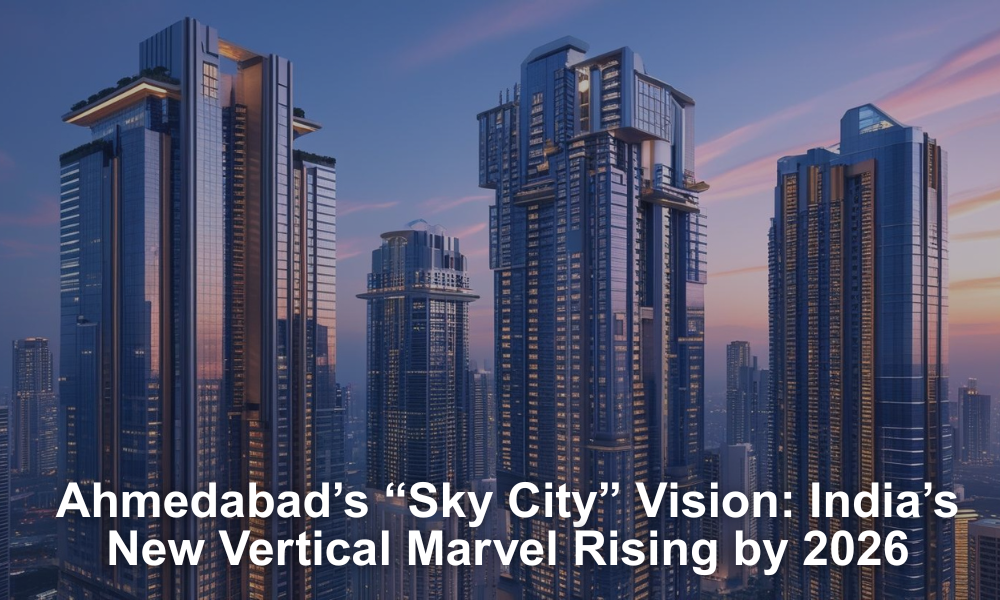
Ahmedabad, one of India’s fastest-growing metropolitan cities, is stepping into a bold new future with its ambitious “Sky City” development plan. The vision aims to reshape the city’s skyline with over 31 skyscrapers taller than 100 meters, making Ahmedabad a rising competitor to Dubai and Mumbai in terms of vertical infrastructure and urban innovation. This transformative idea marks a new chapter for the city—one driven by global standards, smart planning, modern architecture, and long-term sustainability.
Over the past decade, Ahmedabad has consistently shown remarkable progress—from becoming India’s first UNESCO World Heritage City to emerging as a hub for finance, culture, education, and smart technology. The new Sky City plan aligns perfectly with this momentum, positioning Ahmedabad as a futuristic city designed to accommodate India’s growing aspirations.
A Vision Inspired by Global Cities
Cities like Dubai, Shanghai, Singapore, and New York are known for their awe-inspiring skylines. India has already witnessed the vertical transformation of Mumbai, but Ahmedabad is preparing to take this development further with an integrated and well-planned skyscraper zone.
The goal is not just to build tall buildings, but to create:
- A skyline symbolizing progress
- Urban spaces with better utilization of land
- Modern residential and commercial hubs
- Eco-friendly and sustainable tall structures
- Smart mobility systems around the vertical city
This initiative demonstrates Gujarat’s commitment to future-ready infrastructure, global investment potential, and world-class urban living.
Where Will the Sky City Come Up?
While final zoning plans are under development, several areas in and around Ahmedabad are being considered for vertical expansion:
- S.G. Highway
- GIFT City extension zones
- Near the Sabarmati Riverfront
- South Ahmedabad expansion area
- Nikol–Naroda and eastern corridors
- Upcoming Transit-Oriented Development (TOD) zones
The Windfall of growth around GIFT City already shows how Gujarat is attracting domestic and global companies. Sky City will complement this ecosystem, bringing more residential and commercial spaces closer to emerging economic zones.
Why Ahmedabad Is Ready for a Vertical Leap
- Robust Infrastructure Development
Ahmedabad has seen massive upgrades in transport networks and city planning:
- Metro rail corridors expanding rapidly
- Wider roads and ring-road upgrades
- Sabarmati Riverfront Phase 2 under development
- High-speed rail (Mumbai-Ahmedabad bullet train)
- Upcoming expressways connecting the city to major Gujarat hubs
These developments create a strong foundation for skyscraper-based zones.
- Economic Growth & Global Investment Potential
Ahmedabad is home to:
- Major corporate houses
- Manufacturing and textile giants
- Emerging IT and fintech sectors
- International education and healthcare centers
With growing interest from NRIs, global companies, and real estate investors, the city is poised for major vertical real estate expansion.
- Smart City Initiatives
Ahmedabad is consistently improving:
- Surveillance and safety networks
- Smart parking systems
- Green energy adoption
- Digital governance
These advancements align with the needs of tall, tech-enabled buildings.
Features of the Sky City Plan
- Over 31 Skyscrapers Above 100 Meters
The central attraction of the plan is the approval and development of 31+ high-rise buildings, each surpassing 100 meters in height. Some towers may even cross the 200–250 meter mark, making them some of the tallest in India.
- Mixed-Use Mega Towers
Future skyscrapers will combine:
- Residential apartments
- Corporate offices
- Luxury hotels
- Retail malls
- Public entertainment spaces
- Rooftop restaurants and sky decks
This model ensures efficient land use and creates 24×7 vibrant urban zones.
- Energy-Efficient and Green Architecture
Ahmedabad’s climate requires smart design:
- Solar panel installations
- Natural ventilation systems
- Green terraces and sky gardens
- Rainwater harvesting technologies
- High-efficiency cooling systems
This will make Sky City one of India’s most sustainable vertical developments.
- Smart Mobility Integration
Skyscraper zones need strong transport connectivity. Key plans include:
- Metro stations integrated with major towers
- Elevated pedestrian skywalks
- Multi-level parking structures
- Electric vehicle charging networks
- Direct access roads planned in synchronization with skyscraper zones
Impact on Real Estate & Economy
- Boost to Real Estate Sector
Ahmedabad’s property market will see a major uplift:
- Increased demand for premium residential spaces
- Growth in commercial leasing
- Higher land value around skyscraper zones
- New opportunities for construction companies
- Employment Generation
Large-scale building projects create jobs in:
- Construction
- Architecture
- Engineering
- Tourism
- Retail
- IT services
Sky City will generate thousands of new employment opportunities over the next decade.
- Tourism Growth
Skyscrapers themselves can become tourist attractions.
Imagine:
- Sky decks overlooking the Sabarmati
- Luxury rooftop lounges
- Iconic night lighting
- World-class architectural designs
Ahmedabad, already a cultural and historical tourism hub, will also become a modern skyline destination.
Challenges and Solutions
- Traffic Congestion
Vertical cities attract higher population density.
Solution:
Integrated metro systems, wider access roads, smart routing, EV networks.
- Water & Power Management
Tall buildings require robust utilities.
Solution:
Energy-efficient systems, water recycling units, green building certifications.
- Environmental Sustainability
Rapid development must stay eco-friendly.
Solution:
Strict regulations for green materials, mandatory environmental audits, adoption of renewable power.
Why Sky City Matters for Ahmedabad’s Future
Ahmedabad has always been a city of innovation—whether in textile revolution, business leadership, urban renewal, or cultural preservation. With the Sky City plan, it is now stepping into the era of global skyline development.
This project symbolizes:
- Ahmedabad’s ambition to become a global city
- Gujarat’s vision for futuristic urban planning
- India’s emergence as a hub for world-class architecture
- New opportunities for businesses, residents, and investors
Sky City is not just about taller buildings—it’s about creating a modern, sustainable, and technologically advanced Ahmedabad for generations to come.
Conclusion
The Ahmedabad “Sky City” Plan represents a monumental leap in the city’s evolution. With over 31 skyscrapers taller than 100 meters, integrated smart mobility systems, eco-friendly architecture, and commercial-residential mixed-use towers, the city is ready to join the ranks of global skyline capitals.
As planning progresses and construction accelerates, Ahmedabad is set to redefine what an Indian metro can achieve—creating a future where innovation touches the sky and the skyline becomes a symbol of progress.