In recent years, the world has witnessed a growing awareness about environmental sustainability and the urgent need to reduce plastic waste. Plastic pollution has emerged as one of the gravest ecological challenges of the 21st century. With millions of tons of plastic ending up in oceans, rivers, and landfills every year, the adverse effects on wildlife, human health, and ecosystems have become increasingly severe. Single-use plastic bottles, in particular, are a significant contributor to this crisis. Recognizing this, innovators and environmental activists across the globe have started promoting sustainable alternatives, and one of the most promising solutions emerging from India is the bamboo water bottle.
The Problem with Plastic Bottles
Plastic bottles, while convenient and widely used, have a heavy environmental cost. They are primarily made from petroleum-based materials, which are non-biodegradable and take hundreds of years to decompose. Even with recycling initiatives in place, a significant proportion of plastic bottles are never recycled. They often end up in oceans, harming marine life; turtles, fish, and seabirds frequently ingest plastic debris, mistaking it for food, which can lead to death. Additionally, microplastics—the tiny fragments of degraded plastics—enter the food chain, affecting human health and the environment.
The global demand for bottled water continues to rise, and India alone consumes billions of plastic bottles each year. While urban areas struggle with the management of this waste, smaller towns and rural regions face even greater challenges, as waste collection and recycling infrastructure remain inadequate. It is in this context that bamboo bottles offer a sustainable, practical, and eco-friendly solution.
Bamboo as a Renewable Resource
Bamboo, often referred to as the “green gold” of Asia, is one of the fastest-growing plants on Earth. Certain species of bamboo can grow up to 91 centimeters in a single day under the right conditions. Unlike trees, which take decades to mature, bamboo can be harvested in just 3-5 years, making it a highly renewable resource. Its growth requires minimal water, no pesticides, and very little maintenance, making it an ideal material for sustainable products.
In addition to its rapid growth, bamboo has remarkable strength and durability. The natural structure of bamboo makes it lightweight yet robust, and its antibacterial properties further enhance its suitability for drinkware. These characteristics make bamboo an excellent alternative to plastic for manufacturing bottles, offering both sustainability and practicality.
Bamboo Bottles: Design and Functionality
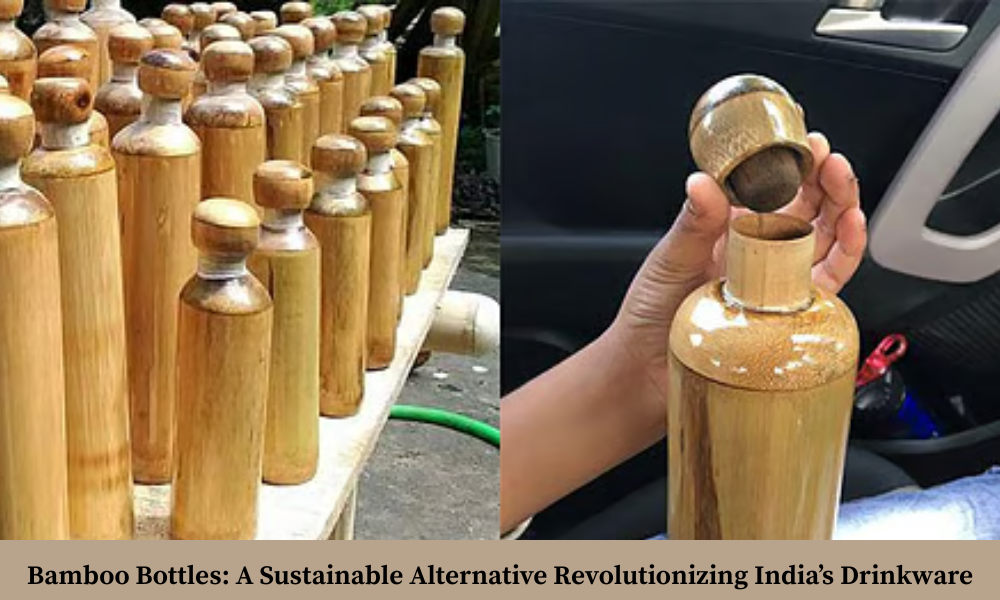
Bamboo water bottles are designed to be functional, aesthetically pleasing, and environmentally friendly. Typically, they are made using a combination of bamboo exterior and food-grade stainless steel or glass interiors, which ensures that the bottles are safe for storing drinking water while retaining the natural appeal of bamboo. Some bottles are entirely crafted from bamboo, with natural seals and finishes to prevent leakage.
The bottles are available in a variety of sizes, shapes, and designs, catering to different consumer needs—from children’s bottles to large capacity bottles for sports and outdoor activities. Many manufacturers also add bamboo lids, straws, and handles, creating a fully biodegradable product that replaces multiple components of conventional plastic bottles. The natural texture of bamboo not only provides a comfortable grip but also reduces the need for additional coatings or chemical treatments, further enhancing the eco-friendliness of the product.
Sikkim Leads the Way
India has been proactive in adopting sustainable alternatives to plastic. Among the states leading this change, Sikkim stands out as a pioneer. In an ambitious move to combat plastic pollution, Sikkim has completely banned the use of single-use plastic bottles, packaging, and other disposable plastic products. To support this initiative, the state has promoted the use of bamboo bottles and other biodegradable drinkware.
The government, along with local NGOs and businesses, has encouraged the production and distribution of bamboo bottles, ensuring that residents have easy access to alternatives. Schools, offices, and government institutions have started replacing plastic bottles with bamboo options, creating awareness and normalizing sustainable practices among the population. Sikkim’s efforts have not only reduced plastic waste significantly but have also set a precedent for other states in India to follow.
Environmental and Economic Benefits
The adoption of bamboo bottles offers a wide range of environmental benefits. Unlike plastic, bamboo is fully biodegradable, which means that once discarded, the bottles decompose naturally without releasing harmful chemicals into the soil or water. This reduces the burden on landfills and decreases pollution in rivers, lakes, and oceans. Moreover, the production of bamboo bottles has a smaller carbon footprint compared to plastic manufacturing, as bamboo cultivation absorbs carbon dioxide and releases oxygen, contributing to climate change mitigation.
Economically, bamboo bottles create opportunities for local artisans and small businesses. The craft of designing and producing bamboo bottles involves traditional skills, and promoting these products supports rural employment and preserves cultural craftsmanship. In states like Sikkim, local communities are increasingly engaged in bamboo cultivation, processing, and bottle production, creating a sustainable economy around environmentally friendly products.
Global Trends and Market Growth
Globally, the demand for eco-friendly drinkware is growing rapidly. Consumers are becoming increasingly conscious of their environmental footprint and are willing to invest in sustainable products. Bamboo bottles have gained popularity in Europe, North America, and Southeast Asia as stylish, durable, and environmentally responsible alternatives to plastic bottles.
Several companies worldwide are innovating in design, adding features such as vacuum insulation, temperature control, and collapsible bamboo bottles, making them competitive with conventional plastic and metal bottles. India, with its rich bamboo resources and growing awareness about sustainability, has the potential to become a significant player in the global market for eco-friendly bottles.
Challenges in Adoption
Despite the benefits, bamboo bottles face certain challenges. First, they are generally more expensive to produce than plastic bottles, which can limit affordability for some consumers. Second, bamboo requires careful processing and maintenance to ensure durability and prevent cracking or mold growth, especially in humid conditions. Finally, large-scale adoption requires awareness campaigns and infrastructure for recycling or composting, ensuring that bamboo bottles are disposed of properly and do not contribute to other forms of waste.
The Road Ahead
The future of bamboo bottles in India looks promising. With government support, increasing consumer awareness, and growing environmental consciousness, bamboo bottles have the potential to become mainstream. Educational campaigns, subsidies for manufacturers, and integration into public institutions can accelerate adoption.
Furthermore, innovation in bamboo processing and bottle design will enhance functionality, longevity, and appeal, making them not only environmentally responsible but also highly desirable from a consumer perspective. By combining tradition, sustainability, and modern design, bamboo bottles represent a holistic approach to reducing plastic pollution.
Conclusion
Plastic pollution is one of the greatest environmental challenges of our time, and single-use plastic bottles are a major contributor. Bamboo bottles offer a practical, sustainable, and aesthetically pleasing alternative that addresses both environmental and economic concerns. By leveraging bamboo’s rapid growth, biodegradability, and strength, India—and states like Sikkim in particular—are paving the way for a greener future.
The adoption of bamboo bottles is more than a shift in consumer choice; it is a movement toward sustainability, responsible consumption, and environmental stewardship. With continued innovation, policy support, and awareness, bamboo bottles can significantly reduce plastic waste, preserve natural resources, and create economic opportunities, proving that eco-friendly alternatives are both feasible and necessary for the world we want to leave for future generations.