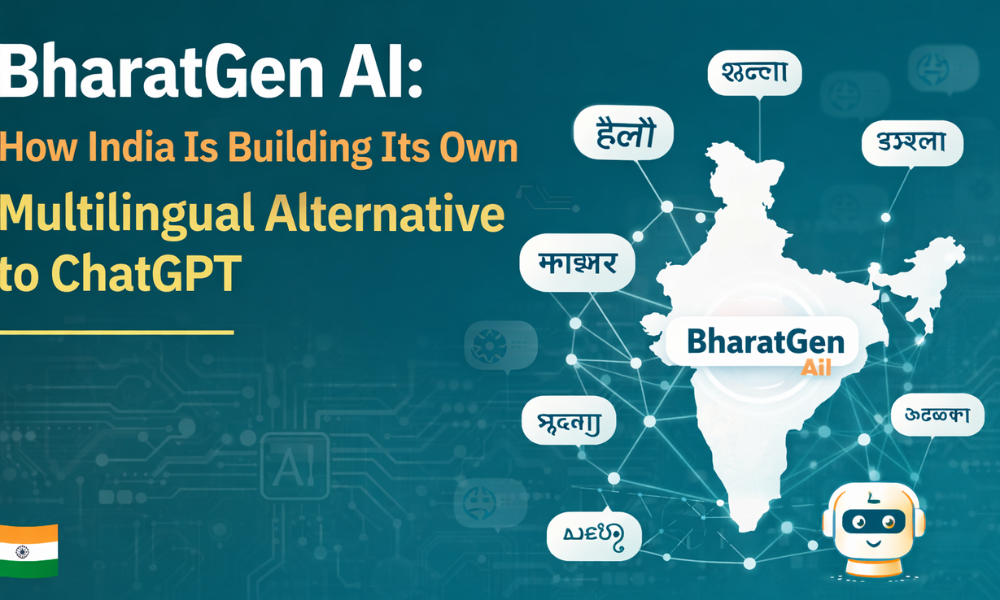
It appears India is making a major move towards digital self-reliance, as the country is introducing native ‘BharatGen AI.’ BharatGen is an artificial intelligence tool designed to comprehend, talk, and create content. BharatGen is an initiative to fill the void related to the myriad languages spoken here, given the immense growth of the digital system. From supporting the Gujarati language to encompassing all 22 languages, BharatGen seems to be a move from the traditional technology prevalent globally, where artificial intelligence tools have already occupied the space.
What is BharatGen AI, and why does India need that?
BharatGen AI is India’s first large-scale, government-backed generative artificial intelligence model made for Indian languages and use cases. Global AI platforms, such as ChatGPT and Google Gemini, are powerful but have been primarily trained on English and Western data, leaving gaps in their understanding of India’s linguistic diversity, cultural context, and knowledge base. The BharatGen model was the answer to bridging this gap by creating an AI rooted in Indian datasets, values, and real-world needs. With hundreds of languages and dialects across a vast population, India needs technology that is inclusive and usable beyond English-speaking users. BharatGen furthers this vision by helping citizens interact with AI in local languages. It also goes hand in hand with the government initiatives of Digital India and Aatmanirbhar Bharat, where important AI infrastructure will not only be built in-house but also controlled in-house to cut down dependencies on foreign platforms.
Supporting Multiple Languages in India through BharatGen AI
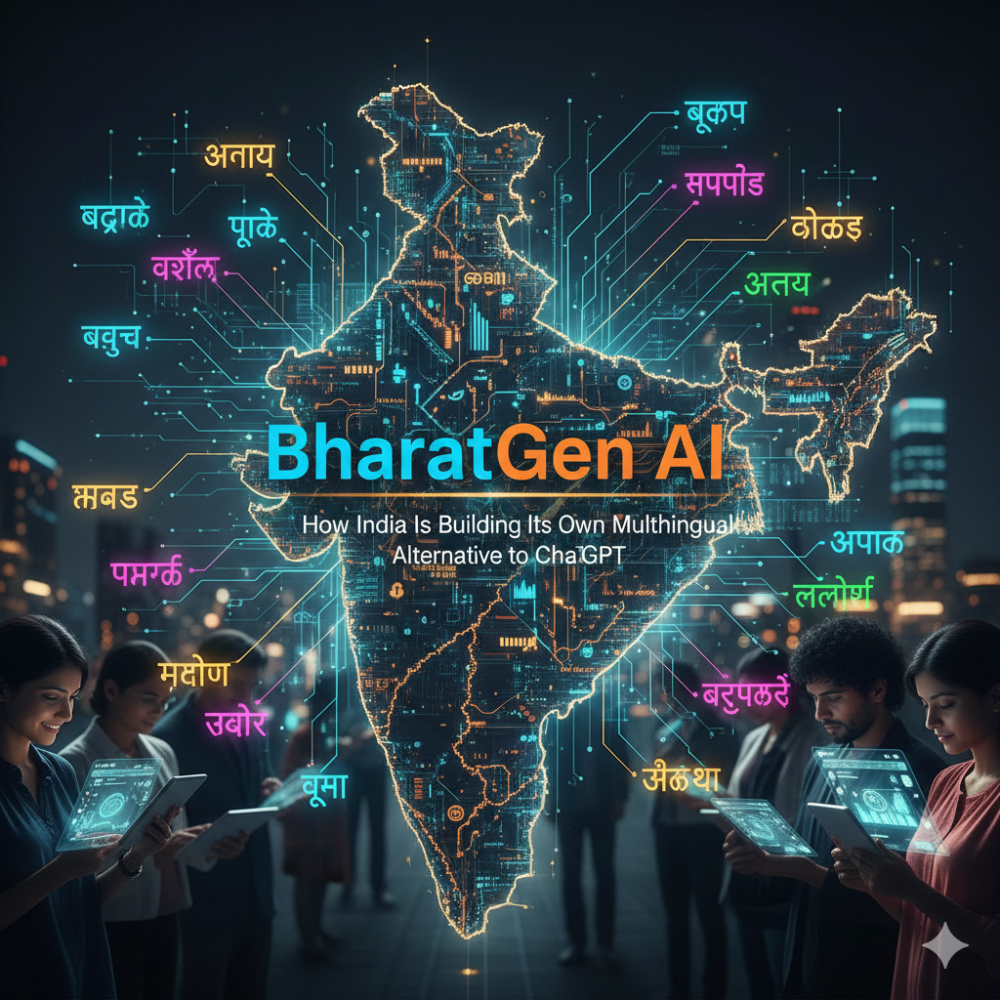
A major aspect of BharatGen AI is being able to support multiple Indian languages. BharatGen currently supports 15 Indian languages, including Gujarati, Tamil, Telugu, Sanskrit, Punjabi, Nepali and Oriya and aims to support all 22 of India’s official languages. BharatGen enables users to write, speak and comprehend different languages digitally, making communication with millions of users more natural. This is even more crucial for users living in rural and semi-urban areas who feel more confident using their regional languages versus using English. BharatGen ability to create content in various Languages allows users to continue to chronicle their input through digital means while preserving their language and culture, all at the same time. Through its ability to help educators, content creators, businesses and others reach larger audiences, BharatGen will ultimately contribute to the realization of an increasingly multilingual and inclusive Internet.
BharatGen and Global AI Models: ChatGPT and Google Gemini
BharatGen was designed to supplement – not compete against – ChatGPT and Google Gemini. While global platforms offer immense scale and general intelligence, BharatGen point of strength is its very India-centric design. BharatGen was trained on content that is connected to local languages, government data, and cultural relevance, enabling it to have better performance levels in the Indian environment. BharatGen will also allow for direct assistance through integration with current AI platforms and improve their capacity to service users in India. The other major area where BharatGen is different is with data sovereignty; BharatGen will ensure that sensitive and strategic data remains within the borders of India. This strategic differentiator makes it uniquely qualified to assist the government for its service delivery, the public sector for its applications, and the education sector. ChatGPT and Google Gemini represent global applications whereas BharatGen represents a sincerely made in India application, with its focus on language inclusivity, the country’s national future, and permanently independent digitally.
The effect on Education, Governance and Digital India
BharatGen AI has the potential to significantly improve various sectors, particularly education, governance and digital services. In the field of education, it can enhance the learning of students in their native language, create a resource for study material available in regional languages, and assist teachers by providing localised material. In terms of governance, by providing AI powered chatbots for citizen services as well as the ability to translate documents and provide voice assistant services to people in their native languages, BharatGen can provide improved access to all citizens with respect to all government schemes and information. BharatGen is also contributing to the implementation of the Digital India initiative as it works to reduce language barriers which can hinder the use of technology. In addition, BharatGen can be utilised by start-ups, media companies and small businesses to generate the creation of regionalised content allowing them to reach people who have not previously been reached. Overall, BharatGen is not just an advancement in technology but rather it is an economically and socially enabling resource that will bring AI to the everyday citizen of India.
Conclusion
BharatGen AI represents an unprecedented milestone in the journey towards digital self-reliance in the Indian economy, offering unparalleled opportunities for inclusive technology development in the country. From addressing the critical gap in the availability of Indian languages within the existing global focus on English-dominated AI technologies, the AI model brings tremendous opportunities to the nation’s development landscape by promoting the availability of Indian languages in digital technology, thereby facilitating a more inclusive approach to technology adoption within the nation’s boundaries. As the model promises to reach all 22 official Indian languages, the focus on AI technology is highly desirable, promoting the indigenization of technology solutions to the benefit of the nation’s digital landscape. BharatGen, therefore, is not only about the manifestation of AI technology but also about the level to which the nation’s future, in terms of digital technology, will embrace the opportunities offered by the availability of Indian languages in the AI technological framework.