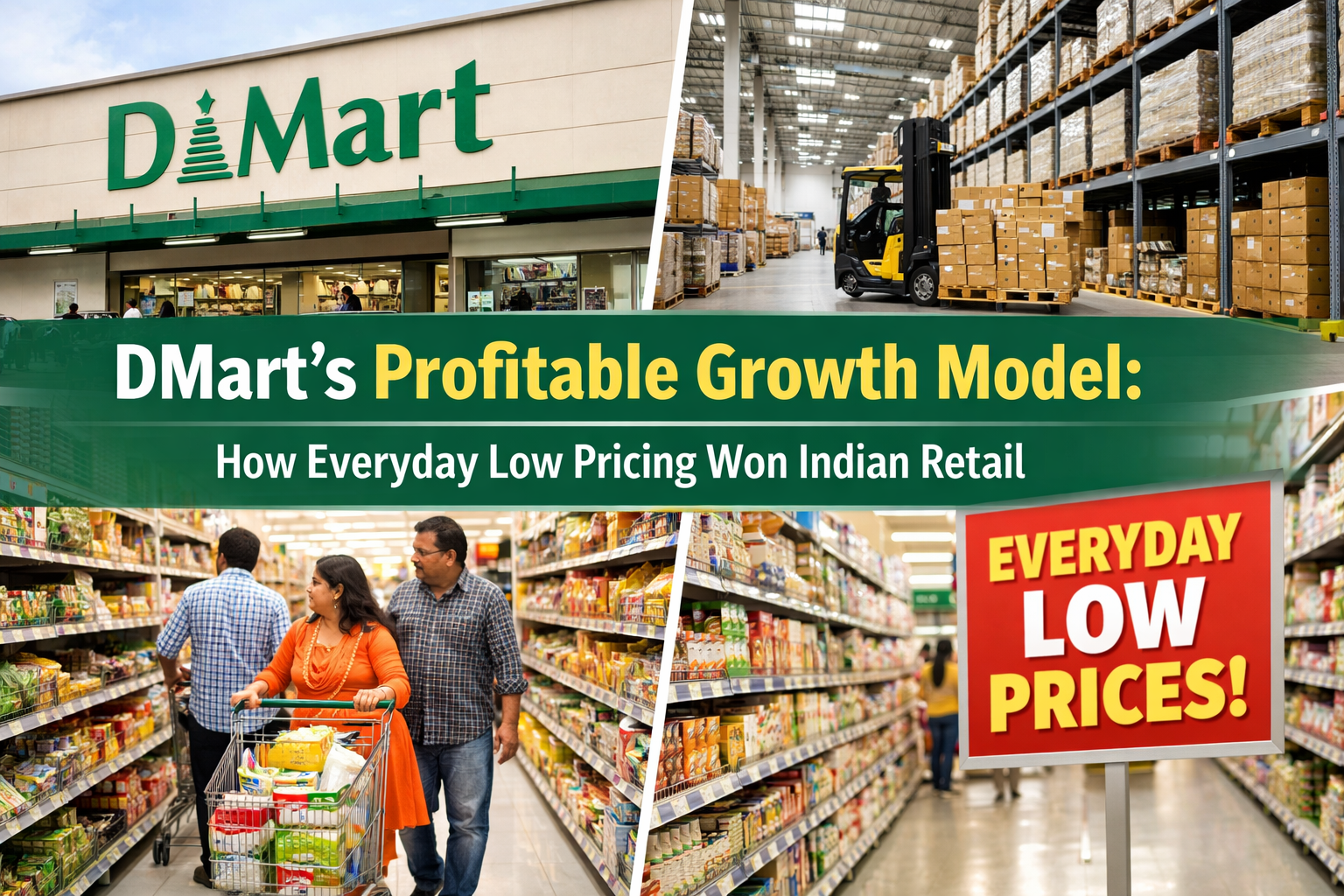
DMart has managed to become one of India’s most profitable retailers in the marketplace by doing something surprisingly simple—offering low prices every single day. While all the retailers are competing with a growth focus and offering discounts, the discount retailing strategy followed by DMart has won their customers’ trust across millions of Indian households. Read this blog below to get a clear understanding about how its unique business model helped its Everyday Low Pricing turn into a big differentiator.
Everyday Low Pricing (EDLP) – The Core Philosophy Behind DMart’s Success
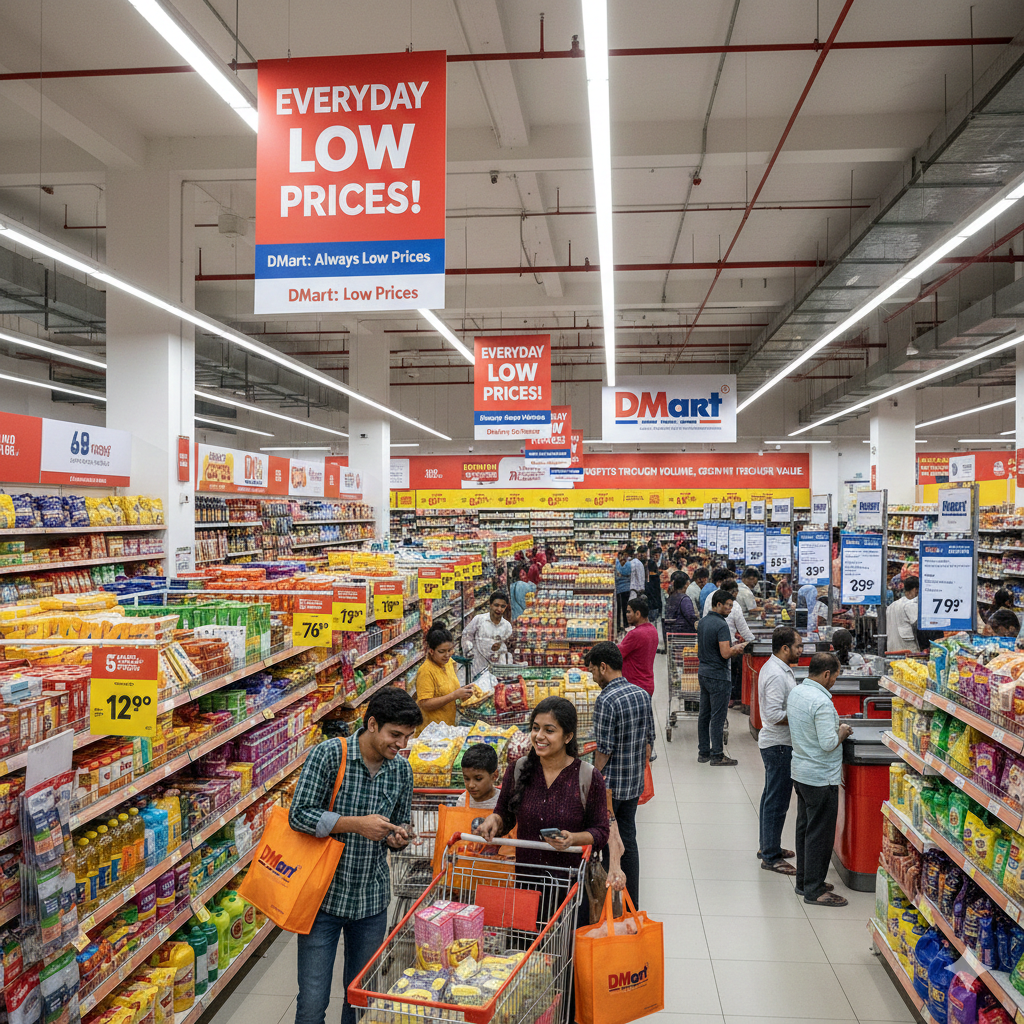
DMart’s policy of Every Day Low Pricing (EDLP), or everyday low pricing, is the guiding principle behind the company’s phenomenal retailing success. Rather than indulging in regular sales, festive season discounts, and gimmicky offers, DMart offers customers low prices on a daily basis. This not only helps the customer trust the company as they know they are getting the best deal at all times, but also makes the pricing policies of the company much easier to implement. There is no requirement to spend more on marketing, which is a big plus for the company as competition tries to maintain higher profit margins through regular discounts. This is one of the significant advantages of the Indian middle-class consumer as the margins are low, the volumes are large, and there is consistency in the pricing policies of DMart. These are the reasons why DMart has been able to gain the loyalty of the masses, unlike competitors who try to maintain higher margins through discounts.
Cost Leadership through Operational Efficiency and Rigorous Cost Control
Cost consciousness is deeply rooted within DMart’s corporate culture throughout the company. All aspects of the store’s operation, including store design, staffing, and supply chain management have been developed using efficiency as a criterion for making decisions. The stores emphasize function over appearance; thus, creating lower startup costs and lower maintenance costs.
In addition to the reduction of costs associated with the setup and maintenance of the stores, DMart also limits its product assortment to fast-moving, basic items, which helps streamline inventory control and increases the company’s bargaining power with suppliers. DMart’s ability to purchase items in bulk and establish long-term relationships with suppliers allow the company to negotiate prices that are passed on to the customer.
DMart also maintains rigid controls on the company’s cost of transportation (logistics), energy consumption and the cost of manpower. Unlike most retailers, DMart has a disciplined approach to growth, whereby every store must become profitable before DMart considers expanding its store base. This disciplined approach to operations has enabled DMart to provide customers with low prices while achieving a consistent level of profitability, even in an extremely competitive retail marketplace.
The DMart Real Estate Strategy – Owning The Stores Makes All The Difference To Strengthen Your Price Structure.
The key component of the DMart retail success is store ownership (not lease). The acquisition of land and buildings before areas begin to develop, and prior to the growth of future development in those areas, reduces DMart’s long-term rental expense. DMart has built significant real estate values and has substantially minimized the impact of both land price and market dynamics affecting retail margin. DMart also realizes significant fixed cost and balance sheet advantages by owning property, which requires a greater initial capital expenditure than the alternative of leasing. Moreover, store ownership allows DMart to have more operational flexibility, such as developing an efficient store layout rather than an attractive store layout. Finally, as cities continue to expand out from the downtown core areas, many DMart locations are increasing in value due to their location, thus providing an additional layer of financial strength. DMart’s use of real estate strategy is an integral part of fulfilling its low-price commitment while still achieving profitability across the business cycles.
Customer-Centric Retailing: High Volume, High Loyalty, Low Margins
Value is at the core of the business model of DMart, which caters to the average value-conscious Indian consumer who desires to save money on their daily necessities; groceries, household products and staples. By concentrating only on those products, DMart provides frequent visits and high-volume transactions. Even though DMart sells at a low margin, they make up for it with fast turnover of inventory and high sales volumes. Stores are designed simply with easy product visibility; there are many quick options for checking out; these attributes add to the overall shopping experience yet do not require additional investments by the company. The development of an emotional connection between customers and DMart over time creates customer loyalty. Customers associate DMart with a retailer who provides quality and value on a consistent basis; therefore, customer loyalty will generate predictable demand for DMart to better plan their supplies and control operational costs. DMart has not pursued the premium customer base of other retailers but has been extremely proficient and successful in mass market retailing. This customer-centric philosophy reinforces the belief that in the Indian market, sustainable success comes from trust, value, and operational disciplines; not from aggressive branding or Aspiration-based positioning.
Conclusion
DMart is an example that in India, simplicity wins over complexity in retail. The company has managed to establish itself as a successful retailer with its push on the “everyday low pricing” model. The disciplined policy of DMart is an example that in India, value is created over long time periods, rather than through short period sales.