Amul is not just a brand of dairy products but it is a symbol of trust to millions of Indian families. Despite the numerous brands following the marketing path of spending more on advertising and endorsements, Amul has gained its reputation due to their emphasis on quality, cost and dependability. Be it empowerment of farmers or availing fresh products to each and every corner of the country, Amul has built its success story on sound fundamentals.
The Cooperative Model: Power of the Cooperative Model
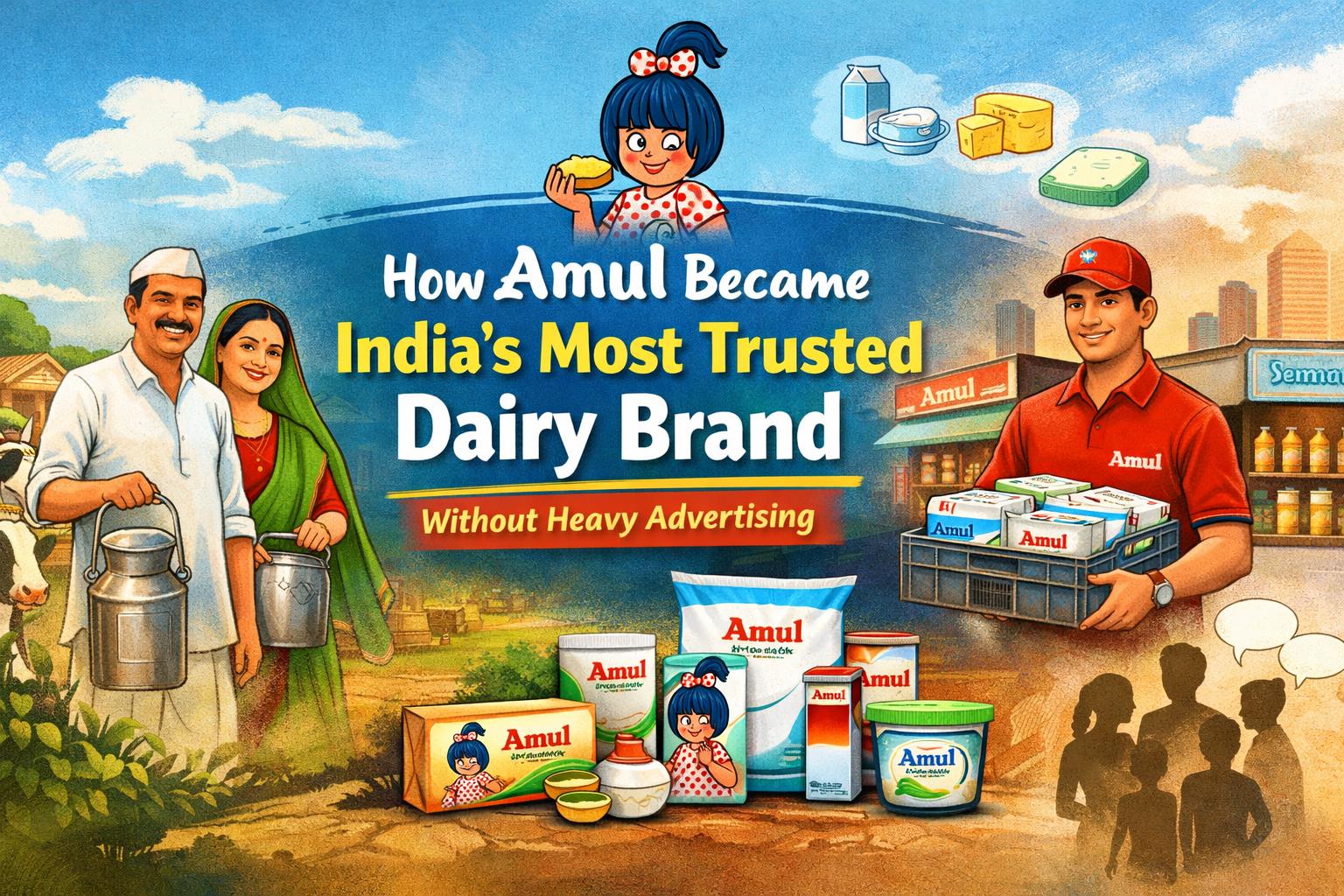
Amul reflects the power of value of co-operatives since it is founded on a co-operative structure that places farmers in charge of their enterprises. The model was created by Verghese Kurien; he made numerous dairy farmers co-owners and not merely suppliers. The co-operative has removed the middle man, offers reasonable prices, and also enables the village to the consumer transparency. Since the co-operative gives the farmers ownership and share in the profits, the co-operative wins loyalty of the farmers at the local level. The capability of the co-operative in supplying milk on a regular basis, quality assurance, and effective operation is experienced all over India. The co-operative did not spend much on advertisement but focused on the development of its rural support system and enhancement of the livelihood of the farmers. This core contributed to a massive growth, and at the same time established a very high degree of trust by consumers who loved the philosophy of the co-operative that was based on ethics and benefiting the community.
The Amul Girl: Low Cost but High Effective Branding Strategy
Amul has had one of the most successful branding strategies through the development of Amul Girl. The Amul Girl is a branding tool which has been in use since the 1960s by being positioned on hoardings with original and funny one-liners, which were related to what was happening in politics, sport, and entertainment. The witty single lines have contributed to making the Amul brand relevant and relatable, without necessarily having to spend colossal sums on advertising. Amul has not had to rely on expensive celebrity endorsements instead it has just had to rely on creativity and consistency to market itself. The hoardings have become a part of the Indian pop culture and have created organic discussions and word-of-mouth marketing, and have continued to build strong brand recall for multiple generations. Amul’s ability to remain relevant and visible through smart creative communications has occurred at a low cost to Amul, and has demonstrated that smart creative communications are much more effective than large-budget advertising campaigns over the long term.

Quality, Consistency & Distribution: The Real Growth Engine
However, the true power of the Amul brand lies not in its branding but in its consistency of product quality and massive distribution network. The brand has been able to maintain strict quality controls right from the point of milk collection at the village level to processing and packaging. By keeping the product affordable without compromising on quality, Amul was able to establish itself as a trusted brand name. The brand’s massive cold chain logistics and distribution network enable products to reach even distant towns. This made the brand less dependent on heavy marketing promotions since satisfied customers automatically drifted back to the brand. Consistency in taste, purity, and price helped build consumer loyalty over time. Rather than relying on showy marketing, Amul built robust backend infrastructure.
Word of Mouth Promotion & Multigenerational Trust Building
Amul’s primary advantage in marketing is multigenerational customer trust. Families that have grown up using Amul’s Products have passed along that Trust to the next generation, ensuring that they continue to buy from the company. With consistent quality at a fair price, the continued use of Amul’s Products by Repeating Customers has reduced the necessity for Amul to spend money on a lot of advertising. Additionally, Amul’s brand has developed a reputation for Pure, Fresh, and Reliable Products that consumers can use every day. Positive Consumer Experiences with Amul have resulted in a natural flow of recommendations through word-of-mouth, particularly in Indian households where recommendations are very influential. This Multigenerational Trust has resulted in the creation of brand equity that cannot be created by money. Rather than maximizing Short-term Visibility with Consumers, Amul has built Long-term Relationships with Farmers and Consumers. As a result of various patient, Trust-based strategies over the years, Amul has grown to become the most trusted dairy brand in India without depending heavily on paid advertising.
Conclusion
Amul shows that it is the strong foundation that has more value than the promotional activities. Rather than spending on the promotional activities, the brand chose to empower farmers, ensure quality, develop a distribution network, and create smart and memorable branding. Over the years, the brand has been able to win the hearts of the customers, and the journey of the brand shows that growth is possible only when value is delivered and not just visibility. By focusing on people, product, and purpose, Amul has been able to change from a small cooperative movement to the most trusted dairy brand in India – a perfect example of how trust can be the most powerful marketing tool for a company.