The year 2016 marked a historic turn in the Indian telecom sector with the entry of Reliance Jio. With the support of Mukesh Ambani, Reliance Jio made a dramatic entry into the sector with a pricing model that revolutionized the way Indians used mobile data. With the offer of free voice calls and very cheap 4G internet services, the company disrupted the telecom giants in the country. This was followed by a massive digital revolution in the country. Internet access became affordable for the masses, and the consumption of data went through the roof. Today, India is one of the largest markets for mobile data in the world. Reliance Jio did not only compete in the telecom sector. It changed the rules of the game and hastened the country’s march towards a digital economy.
The Entry Strategy: Free Data, Free Calls, and the Welcome Offer Shockwave
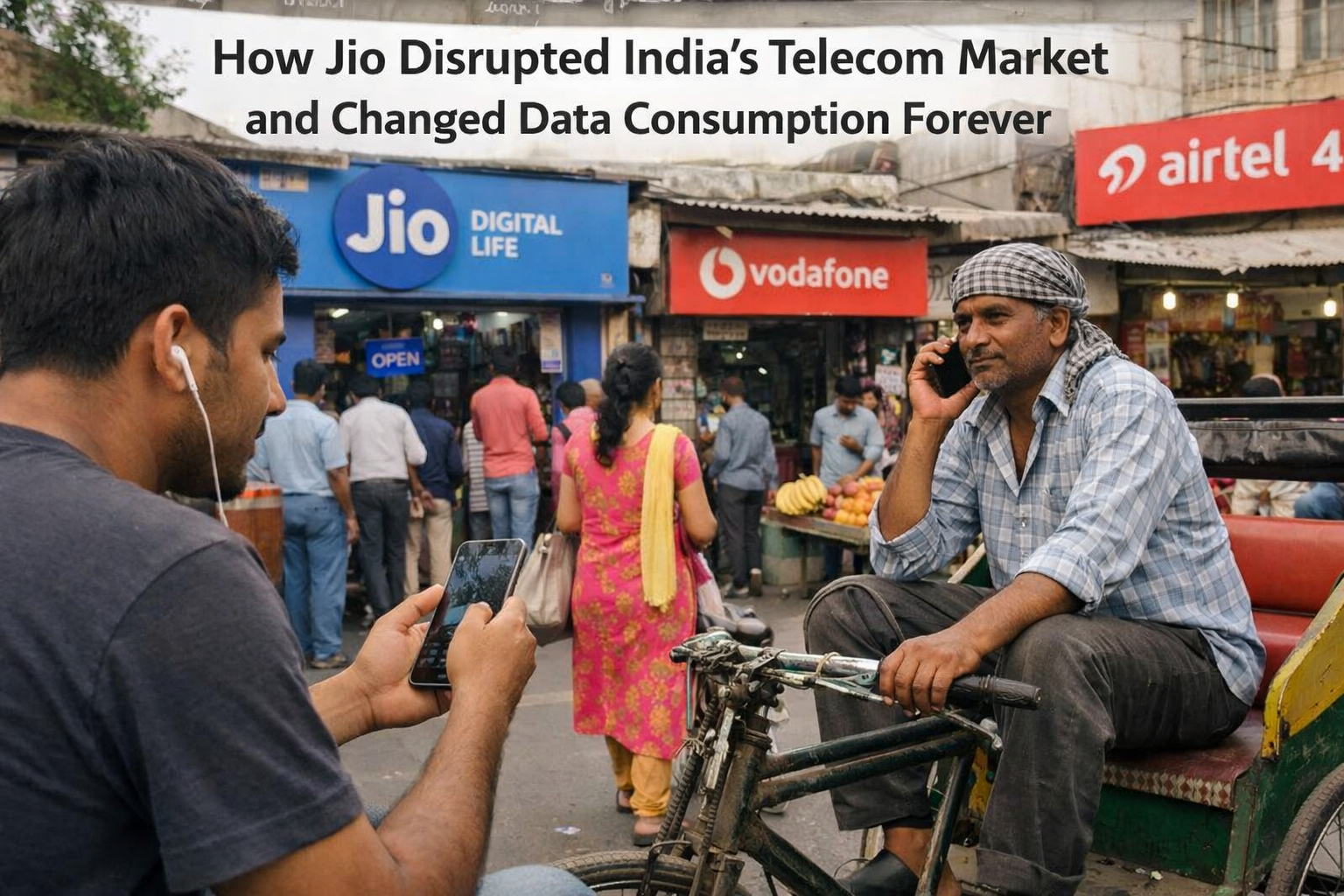
Reliance Jio’s entry into the Indian telecom industry in September 2016 created a shockwave in the industry with its unique entry strategy. The company’s Welcome Offer included free voice calls, free roaming, and free high-speed 4G data. This was a time when mobile data was costly, and voice calls were still a source of substantial revenue for telecom operators. Jio’s entry changed the entire scenario by offering customers something for free. The company’s vision, led by Mukesh Ambani, was not to make money immediately but to acquire customers in large numbers. Millions of customers enrolled with Jio within weeks of its launch, eager to experience the benefits of affordable internet. Jio’s entry strategy turned the entire telecom industry upside down, disrupting the revenue streams that were largely dependent on voice calls and high data charges.
The Price War: What Caused a Telecom Industry Reset After Jio Introduced Disruptive Pricing
The price war caused by Jio’s introduction of a disruptive pricing model led to one of the largest and most intense price wars in Indian business history, forcing established telecom companies (e.g., Bharti Airtel, Vodafone India, and Idea Cellular) to drastically lower their respective data and call price options in order to retain customers. This forced incumbent companies to dramatically reduce their profit margins as they tried to match Jio’s low-cost pricing. Additionally, many of the smaller telecom companies could not survive in the low-cost environment created by Jio and subsequently left the industry. Furthermore, the increased level of competition resulting from Jio forced the industry to consolidate, most notably evidenced by the merger of Vodafone India and Idea Cellular to create a much larger competitor to Jio and Airtel. The overall result of this reset of the telecom sector in India created a marketplace dominated by a small number of companies competing primarily through the delivery of value via data and the quality of their respective networks, rather than competing through the pricing of voice services.
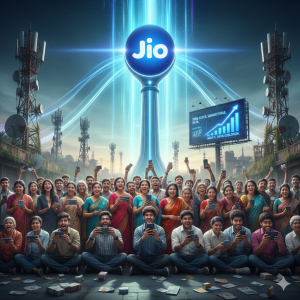
The Data Revolution: From Little Usage to Dependence on Digital
Prior to Jio’s introduction to the Indian market, usage of mobile internet connections was very limited. High costs and slow speeds made it nearly impossible for many people to gain access. Now that Jio offers low-cost 4G mobile data plans, users are able to use mobile data as an everyday necessity instead of as a rare luxury. The rapid increase in online streaming of television shows and movies, online gaming, digital payments, and social messaging has all occurred because of Jio’s enabling of low-cost mobile data. Video streaming platforms such as YouTube and Netflix have seen huge increases in their Indian user base since the introduction of low-cost mobile data. The rapid expansion of mobile data by Jio has also resulted in tremendous growth in the number of digital payment systems being used by millions of Indians through the Unified Payments Interface allowing people to pay for goods and services digitally and enabling many people from rural and semi-urban areas to experience significant digital advancement and reduce the digital divide. India now has one of the highest volumes of mobile data use in the world. Jio changed how people connect to the internet, changed how people consume content, and created an entire new generation of content producers, entrepreneurs, and tech-generated businesses.
Beyond Telecom: Creating a Digital Ecosystem Empire
Jio did not stop at revolutionizing the telecom industry. It went on to create a complete digital ecosystem that includes broadband, entertainment, retail, and partnerships with global technology companies. It launched products like JioFiber and JioCinema to enhance its home internet and digital content offerings. Investments in Meta Platforms and Google helped it speed up its digital plans. Jio ventured into e-commerce and fintech, establishing itself as a complete scale digital services company, rather than a pure telecom player. The digital ecosystem strategy made customers more sticky to Jio. Jio achieved this by integrating connectivity, content, commerce, and technology. Jio transformed itself into a platform-driven enterprise. This is a result of its overall strategy of defining the digital future of India while being the leader in the telecom sector.