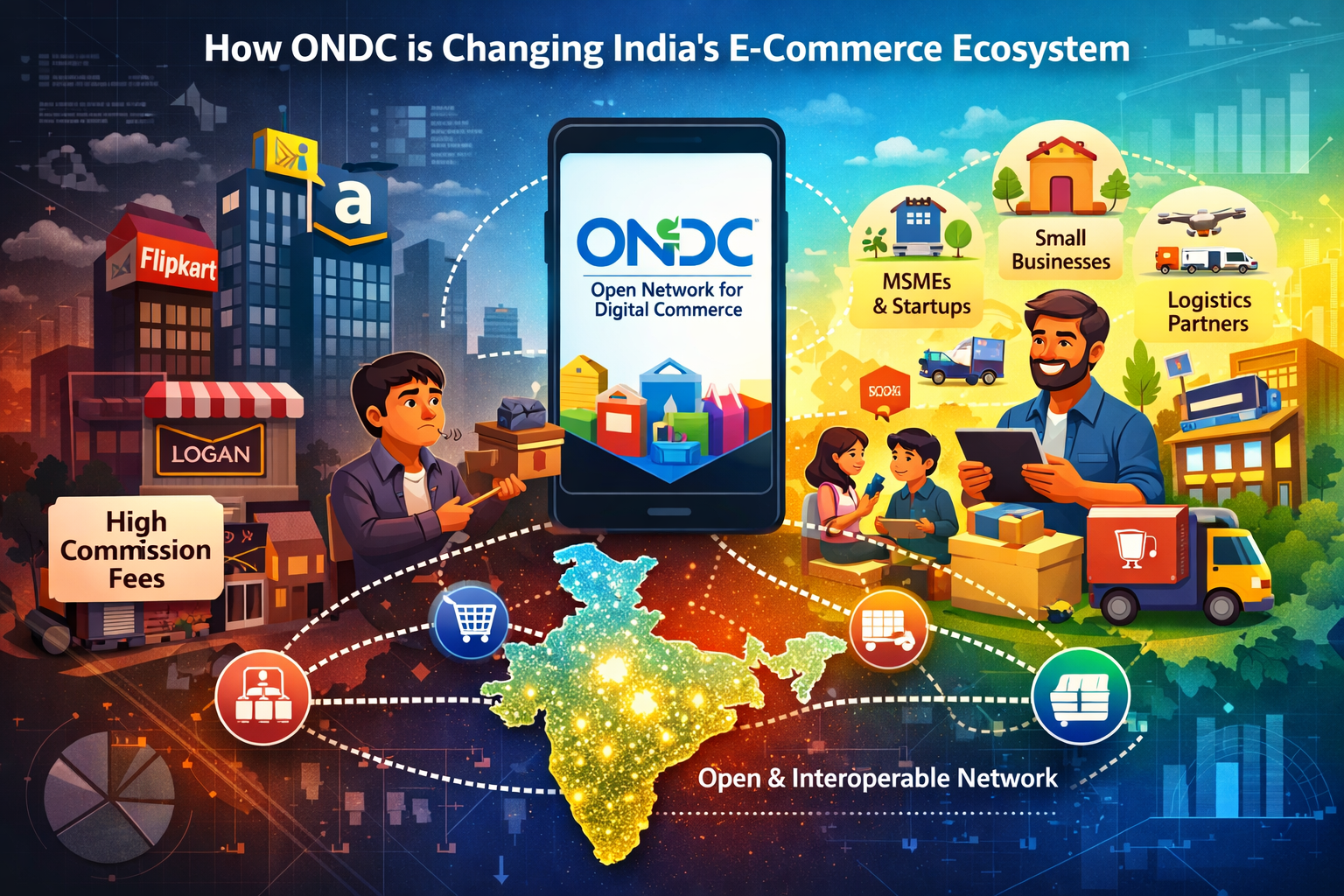
For a long time, India’s e-commerce has been dominated by a few big platforms, which has been at the expense of healthy competition and opportunities for small businesses. However, that is changing with ONDC. ONDC-cum-open, decentralized digital marketplace-aims to empower MSMEs, reduce dependence on platforms, and make online commerce more accessible across the country. With adoption growing, it could go on to redefine how India buys and sells online.
The Problem with Traditional E-Commerce in India
The growth of e-commerce in India has been driven largely by a limited number of dominant marketplace platforms which control pricing and visibility, logistics, and access to customer data. These platforms helped to drive overall volume of online shoppers but created some structural problems along the way – particularly for small sellers. For example, many sellers find themselves having to pay very high commission fees, facing increasing pressure to offer discounts, and having no control over how they’re able to connect with customers. Product visibility is determined through algorithms that make it hard for new or locally based businesses to compete with large well-known companies. Further, data is owned by the platform which limits sellers from fully understanding or having direct interactions with their customers. The centralization of this model has raised challenges in terms of monopolistic control and opportunity inequality in digital commerce. For the millions of micro, small, and medium-sized enterprises (MSMEs) and family-owned retailers in India, it can be hard or too expensive for them to enter an online marketplace. These issues illustrate a need for a more open and inclusive framework for digital commerce – hence, the creation of ONDC.
What is ONDC and how it works.
The Open Network for Digital Commerce, or ONDC for short, is an open network backed by the government to decentralize India’s e-commerce ecosystem. Unlike conventional closed-marketplace platforms, it works as an open network connecting buyers, sellers, logistics providers, and payment gateways through common protocols. Sellers aren’t necessarily locked up with just one app; they may list their products on any seller app enabled by ONDC. Similarly, customers can buy from them using any compatible buyer app. This interoperability removes platform dependency and increases discoverability. It doesn’t work as a marketplace itself but provides the necessary digital infrastructure that allows interoperability of transactions across apps. Separation of the network layer from the application layer results in competition, transparency, and innovation. Similar to the way in which UPI transformed digital payments—a shared system wherein multiple apps interact within one unified ecosystem.
Understanding How ONDC Will Help Us Grow
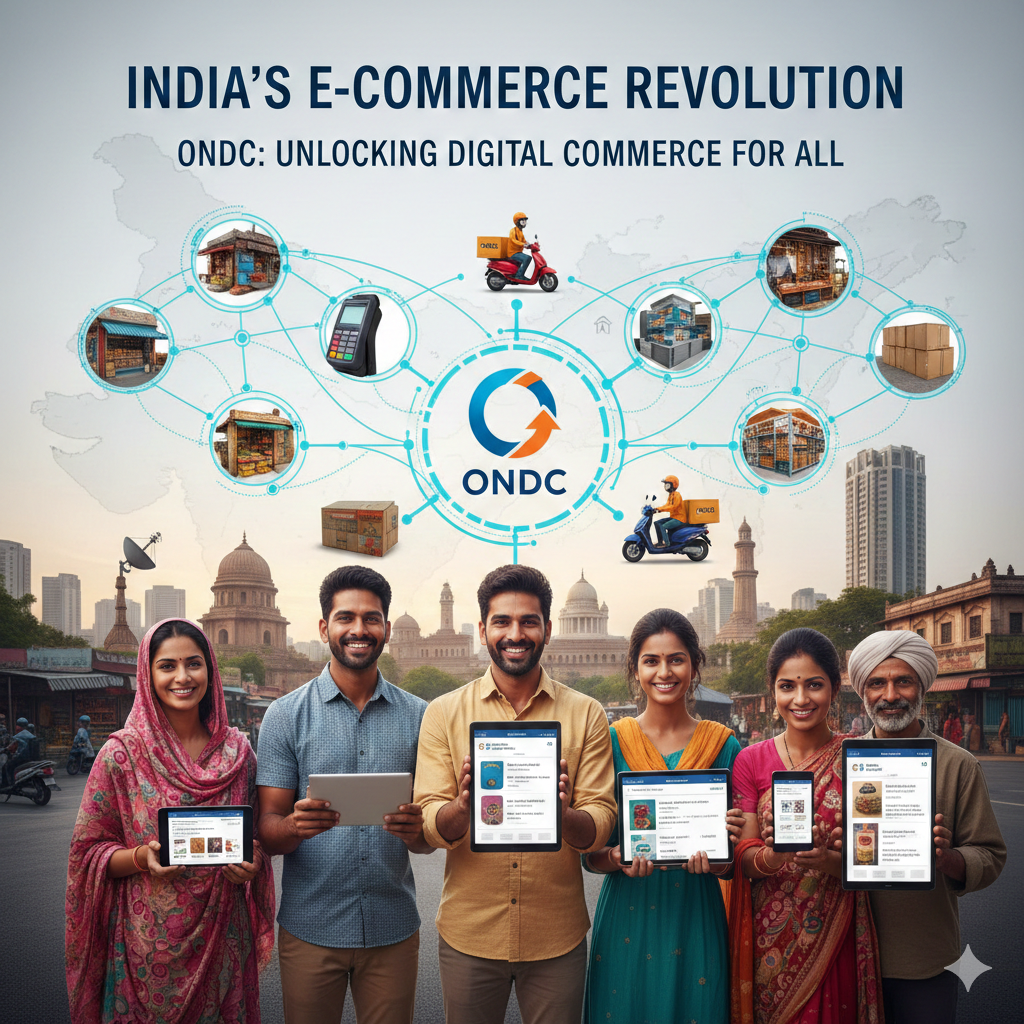
The ONDC’s biggest advantage is that it will empower India’s MSMEs, Startups, and Local Shops. When sellers don’t have to rely on just one platform for selling their products, they have more freedom to set their own prices, manage inventory, and build relationships with customers.
Sellers will be able to build more transparent and competitive commission structures, which can help to decrease the cost of operations.
Through ONDC, small business owners will be able to reach more buyers through digital channels than ever before because they will be listed on multiple buyer apps without needing to enter into exclusive agreements. Logistics and payment service providers’ integration with ONDC will provide smooth order fulfillment and secure payment processing. For local supermarket or kirana store owners and regional brand owners, ONDC will create a large customer base without much investment in marketing.
Ultimately, by making digital commerce accessible to all sizes of businesses, ONDC could support the formalization of the retail industry in India and promote inclusive economic growth in our country over time.
Challenges, Adoption & the Future of ONDC
ONDC faces a significant number of challenges that will hamper its ability to redefine India’s online market, despite this being a potentially transformative platform. First, most consumers do not know about ONDC and continue to shop almost exclusively via well-established e-commerce alternatives. Once a business has been onboarded, selling via ONDC will also require ongoing education to be successful, especially for smaller retailers with limited digital expertise. The multi-app logistics management associated with ONDC will also create unique operating complexities in the beginning. In order to compete with longstanding players like Amazon and Flipkart, ONDC will need to generate high adoption rates and build trust. If scaling is done properly, ONDC has the ability to change India’s digital economy by introducing competition and omitting the excessive concentration of marketplaces. Moreover, ONDC aligns with the Digital India program’s broad objective of bringing millions of businesses into the e-commerce domain. As the necessary infrastructure improves and the number of participants increases, ONDC has an opportunity to lay the foundation for a more open, accessible, and innovative future of e-commerce.
Conclusion
ONDC is a big cultural shift in India’s digital commerce. Moving from a platform-centric model to an open, interoperable network, it seeks to empower MSMEs, ensure increased competition, and further an inclusive e-commerce ecosystem. Though challenges persist on the level of awareness and adoption, the long-term potential is huge. If ONDC is able to scale effectively, it could do for e-commerce what UPI did for digital payments: democratize access, reduce dependency on dominant players, and unlock new growth opportunities for businesses across India.