
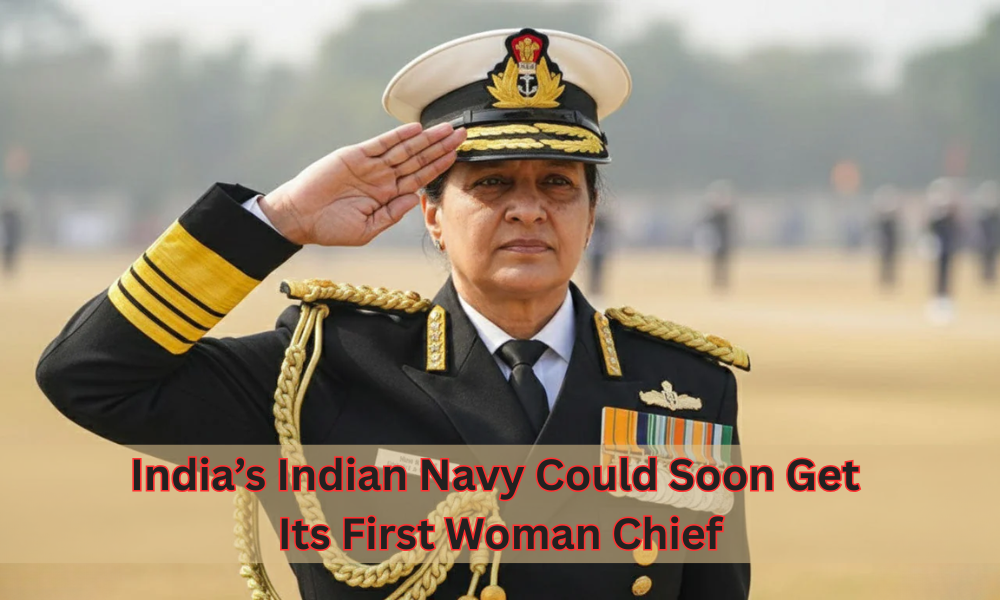
In a landmark development for India’s armed forces, the Indian Navy is poised to appoint its first ever woman Chief of Naval Staff (CNS) a position historically held by male officers. While the historic selection has not been officially made, senior Navy leadership has publicly affirmed that it is not only possible but “highly conceivable” that a woman will lead the service in the coming years, marking a significant milestone in gender inclusion and military evolution.
Breaking Decades of Tradition
Since its establishment in 1950, the Indian Navy has been commanded exclusively by male admirals. However, decades of progressive policy reforms and expanding roles for women in operational capacities now point toward a future where gender is no longer a barrier at the highest command levels. The Chief of Naval Staff himself has endorsed this idea, noting that women officers are now present in virtually all branches, including aviation and command roles and that the next logical step is leadership at the top echelon.
The Navy’s journey toward inclusivity began in the early 1990s when women were first inducted as officers. For years, they served in shore roles, logistics, medical services, and other non-combat positions. Today, women serve on warships, as pilots (including helicopter and fighter streams), and in command positions. Recent statements by Admiral Dinesh Kumar Tripathi, CNS, highlight the progress made: “It is highly conceivable few years from now you will have a woman admiral standing here and giving this talk,” referring to key leadership events.
Milestones That Led to This Moment
While the first woman Chief of the Indian Navy has yet to be appointed, several precedents and milestones showcase how this historic moment is becoming a reality:
- Women in Command at Sea
In December 2023, Commander Prerna Deosthalee became the first woman officer to command an Indian naval warship the INS Trinkat. Her appointment was welcomed as a symbol of expanding leadership roles for women in key operational positions.
Commander Deosthalee also made history as the first female observer on the long-range Tu-142 maritime reconnaissance aircraft, demonstrating her versatility and breaking commercial and traditional naval barriers.
- Women in the Fighter Stream of Naval Aviation
In a remarkable achievement for gender inclusion in combat aviation, Sub-Lieutenant Aastha Poonia became the first woman to be streamed into the fighter pilot track of Indian Naval Aviation. This milestone was marked by her receiving the prestigious “Wings of Gold” after completing advanced conversion training a historic moment in the Navy that expands women’s roles into frontline combat aircraft.
- Leadership Beyond Sea Commands
Women have also achieved significant firsts in other branches:
Lieutenant Commander Yashasvi Solanki became the Indian Navy’s first woman Aide-de-Camp to the President of India, symbolizing leadership recognition at national ceremonial levels.
Surgeon Vice Admiral Arti Sarin served as the first woman Director General of Armed Forces Medical Services, representing women’s leadership across the tri-services — Army, Navy, and Air Force.
These accomplishments underscore a broader cultural shift within India’s defense forces: one that recognizes merit, capability, and leadership potential regardless of gender.
Why This Matters
The prospect of appointing a woman as Chief of the Indian Navy holds importance on multiple levels:
Gender Equality and Empowerment
The Indian armed forces have historically been male-dominated, particularly in combat and command roles. A woman at the helm of the Navy would serve as a powerful seal of approval for gender parity, inspiring countless women to pursue careers in defense and leadership. It would reflect India’s evolving commitment to “Nari Shakti” (women’s strength) a term increasingly associated with gender equality and empowerment across Indian society.
Operational and Strategic Capability
Women officers in the Indian Navy have demonstrated excellence in diverse capacities — from commanding warships to aviation roles. Their progression into leadership roles affirms that operational effectiveness and strategic insight transcend gender lines. As women continue to assume roles in advanced operational theatres and command positions, it becomes increasingly feasible for them to ascend to the service’s highest roles.
International Military Trends
Globally, militaries are recognizing the value of diverse leadership. For example, the U.S. Navy appointed Admiral Lisa Franchetti as its Chief of Naval Operations — making her the first woman to hold that position and the first female member of the U.S. Joint Chiefs of Staff. This demonstrates the strategic importance of gender inclusivity at the highest levels of military leadership.
Challenges and the Path Ahead
Despite the clear momentum, appointing a woman Chief of the Indian Navy will require sustained policy support, structural readiness, and continued performance excellence from women officers across the force.
One operational area still closed to women as of late 2025 is the submarine arm — a domain that Navy leadership has indicated will open when feasible. Expanding women’s roles here would help broaden the pool of eligible senior officers with diverse command experiences, further strengthening the case for a woman at the highest ranks.
The Navy’s “all roles, all ranks” policy, which ensures women have access to most operational positions, is central to this evolution. Continued emphasis on training, mentorship, and developmental opportunities will be crucial to building a leadership pipeline that naturally culminates in a woman Chief of Naval Staff.
Looking to the Future
The Indian Navy’s projected appointment of its first woman Chief though still prospective represents both symbolic and substantive progress. It celebrates not just an individual milestone but the cumulative achievements of women officers who have shattered obstacles and redefined what’s possible in India’s defense landscape.
From commanding warships to flying combat jets and serving in top ceremonial positions, women in the Indian Navy are already shaping the service’s future. The next step a woman at the helm would not just rewrite history but also chart a new course for generations of Indian naval officers to come.