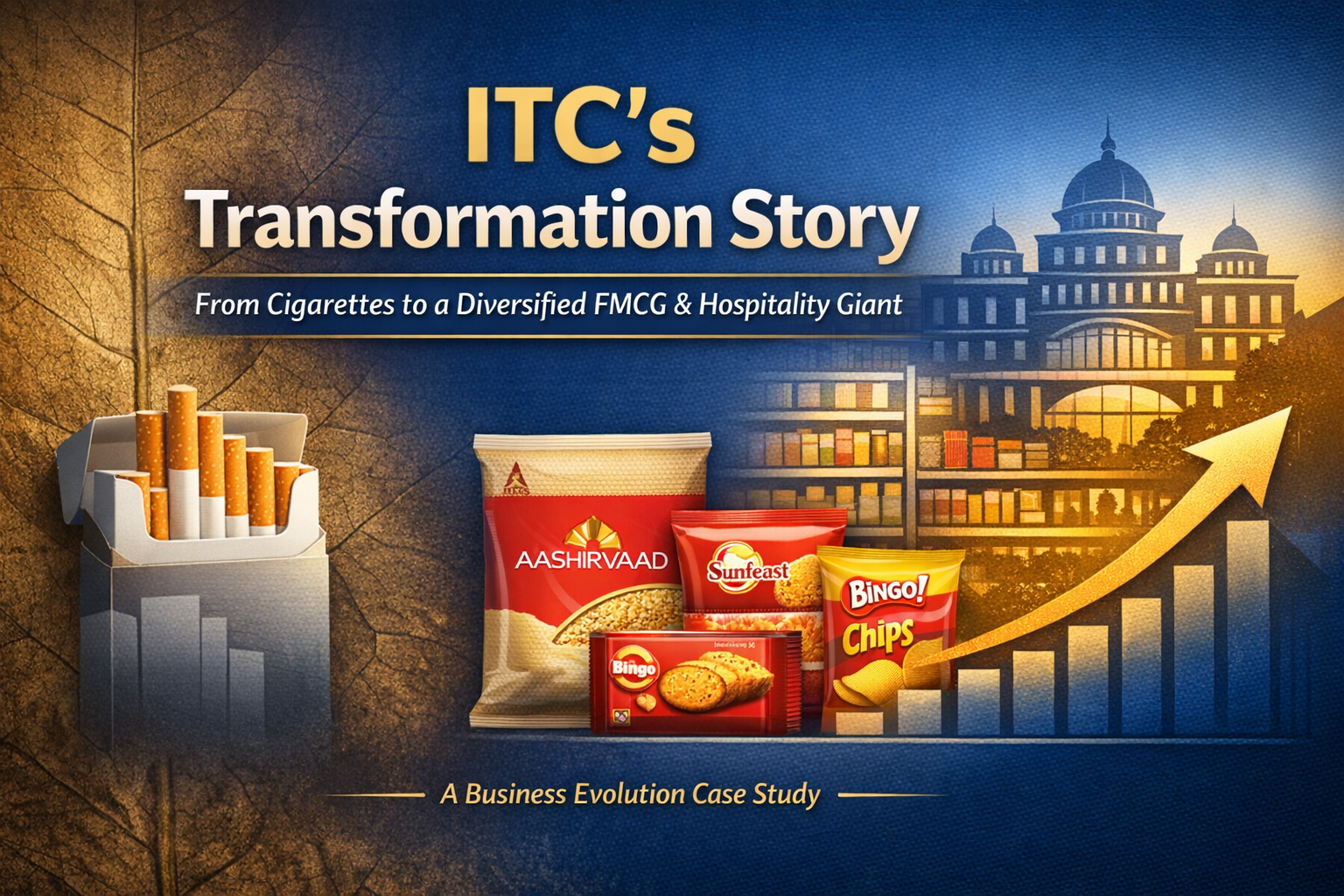
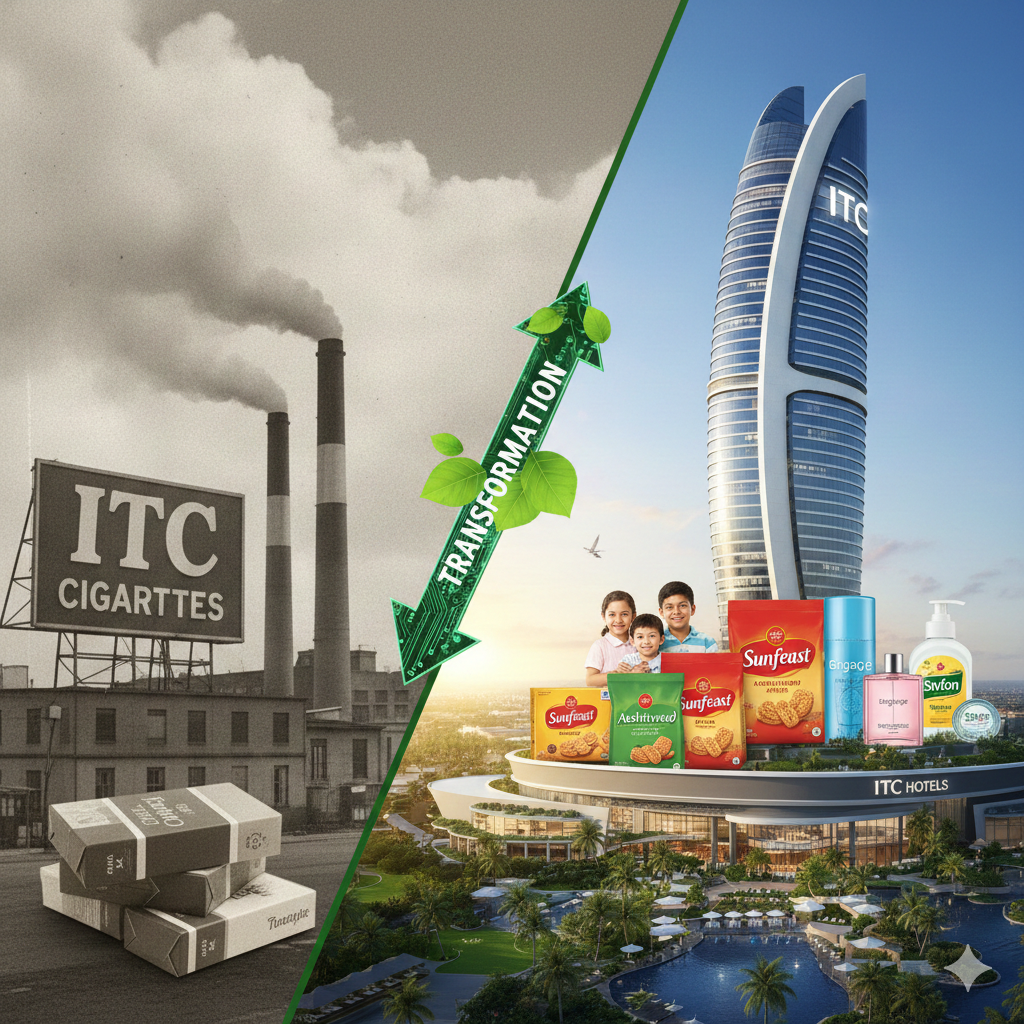
The transformation of ITC is arguably one of the most spectacular corporate transformation stories of modern Indian corporate history. ITC evolved from being perceived as a purely tobacco company into a diversified conglomerate with businesses like FMCG, hospitality, agriculture business, paperboard, and information technology. ITC utilized its cash flow advantage of the tobacco business and took bold steps towards diversification. Today, ITC is a testimony to the power of vision and diversification for driving corporate growth.
The Tobacco Foundation: How Cigarettes Built ITC’s Financial Strength
ITC’s cigarette business has been perennially its financial backbone. With iconic brands like Gold Flake, Classic, and Navy Cut, ITC leads the Indian legal cigarette market. Despite heavy taxation, several regulatory restrictions continue to throw in strong margins and steady cash inflows from the segment. This profitability provided ITC with the required capital to diversify into new sectors without high reliance on external debt. While tobacco remains an extremely controversial industry, ITC leveraged this leadership position strategically-cigars as a cash-generating engine rather than their core identity. The company has ensured continuing market strength through operational efficiency, expanded distribution reach, and brand equity. These robust earnings have, therefore, helped ITC patiently build new businesses, absorb early losses in FMCG and hospitality, and maintain overall financial stability, backed by shareholder confidence.
FMCG Expansion: Building Billion-Rupee Brands Beyond Tobacco
ITC has undergone a substantial change from its roots in the tobacco business to providing everyday necessities through its new line of consumer goods known as the Fast-Moving Consumer Goods or FMCG. The first step taken by ITC when it moved into FMCG was to produce staple foods under the Ashirwad brand, and from that point on, it expanded rapidly into many different categories such as: bakery products (biscuits) with the SunFest brand; snack foods with the Bingo brand; instant noodles with the Yippee brand; chilled dairy products; non-alcoholic beverages; and personal care products. Even though the FMCG segment lost money at first because of heavy investment in brand-building, distribution, and product innovation, ITC was able to build up many different billion-rupee brands by utilizing its extensive distribution system and understanding of the Indian consumer. It focused on premiumisation, differentiation and strong penetration into rural areas. While many of its competitors relied primarily (if not exclusively) on building a few large successful brands, ITC developed a broad-based portfolio of products across many different categories, therefore, diversifying its risk. Eventually, FMCG contributed significantly to ITC’s overall profitability, and it is now one of the fastest growing areas in the company’s operation. The growth in the FMCG business proves that companies with a long-term investment mentality, combined with the use of patient capital, can successfully turn any new business venture into a market leader.
Establishing a Multi-Sector Empire through Hospitality and Agri-Business
ITC’s expansion isn’t limited to only being in FMCG, but also in hospitality and agri-businesses, further establishing themselves as a multi-sector company. The company built out its hotel business by establishing ITC Hotels to compete in the luxury and premium segments of the hotel market, using sustainability and responsible luxury as their primary characteristics. By doing this, ITC Hotels have developed into a globally recognized brand for their environmentally conscious practices and have received multiple LEED Platinum certifications at some of their properties. Although the hospitality industry has been shown to be cyclical and capital intensive, the hotel business has given ITC its own brand prestige and contributed to its overall multiple revenue streams. Additionally, ITC has built a strong agri-business in sourcing directly from farmers. The agri-business segment at ITC has transformed the logistics of the rural supply chain through its e-Choupal initiative, whereby farmers receive market information and better price discovery thereby improving procurement costs. In turn, this has led to the development of strong relationships with rural communities to help support the FMCG distribution chain for ITC. Overall, both the hospitality and agri-business activities build upon and strengthen the company’s integrated business model by increasing synergies in sourcing, branding and sustainability across the entire organization.
The Conglomerate Strategy: Risk Diversification & Long-Term View
ITC’s makeover represents an astutely thought-out conglomerate strategy aimed at de-risking its dependence on tobacco. Reinvesting the ‘sin’ profits from cigarettes into FMCG, paperboards and packaging, hotels, and IT services, ITC created multiple drivers of growth. This diversified play reduced regulatory risks associated with tobacco while opening up newer consumer markets for the company. ITC adopted a long-term approach, content with short-term losses in emerging segments as a trade-off to build scale and competitive strength. The integrated value chain-from farm sourcing to branded consumer products-created operational efficiencies and led to better margins. Equally, the company laid emphasis on sustainability, corporate governance, and innovation to future-proof its businesses. Rather than race to expand aggressively, ITC expanded gradually, with each vertical attaining stability before aggressive scaling up. Today, ITC is a resilient conglomerate with balanced revenue streams-a tribute to the tenets of disciplined capital allocation and strategic patience that have driven its sustainable transformation.
Conclusion
The transformation of ITC from a cigarette company to a conglomerate covering diverse sectors like FMCG, hospitality, agriculture, and packaging is a masterclass on how to strategically transform a company. Instead of using the profits generated from cigarettes as a stepping stone to fund growth in another segment, they have created a financial back-end to grow businesses across different sectors like FMCG, hotels, agriculture, and packaging. Today, ITC is a conglomerate that can weather any storm while maintaining its standing as a traditional company, thus underscoring the point that a traditional company can indeed successfully transform its identity with the right strategy.