
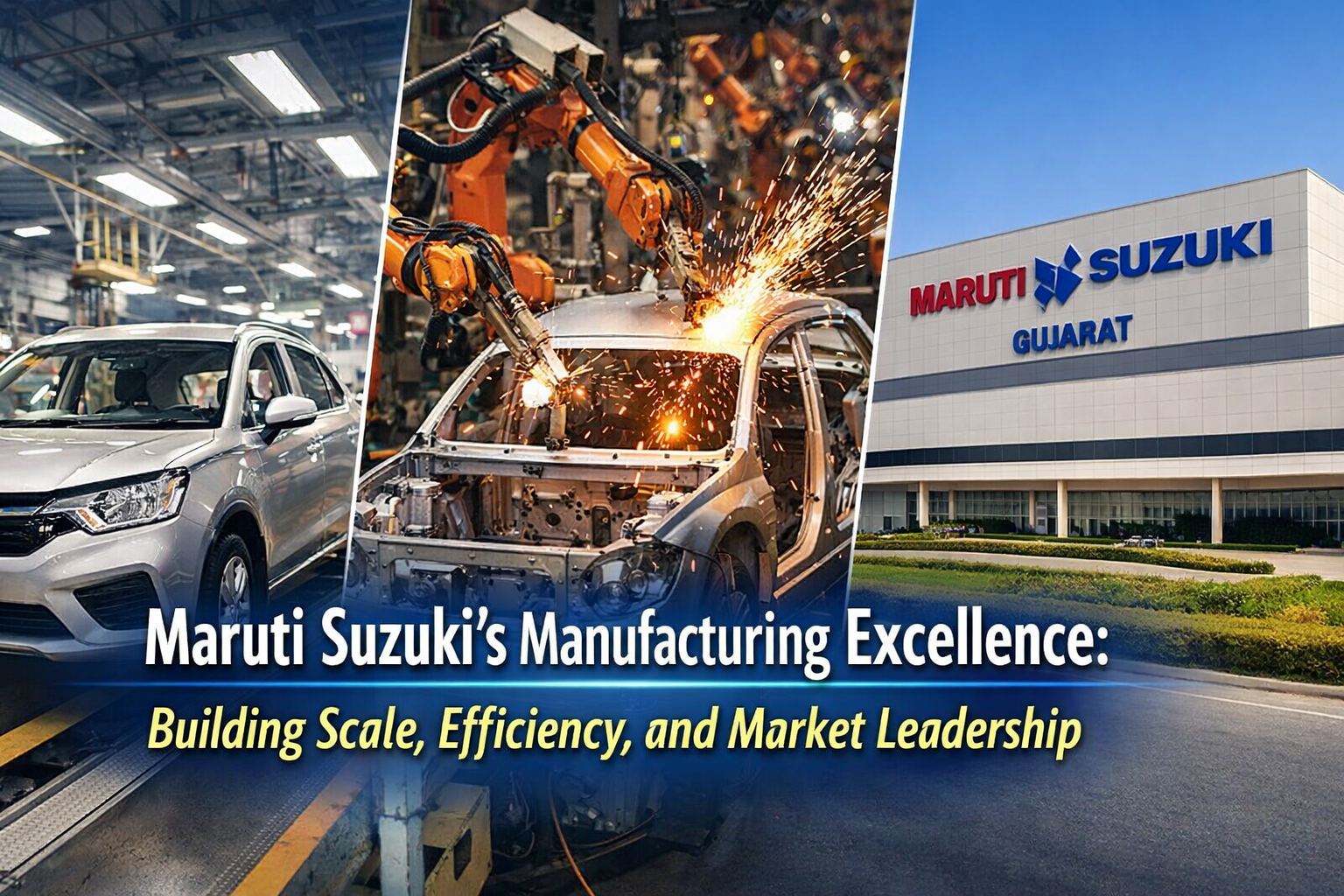
Maruti Suzuki has become synonymous with the passenger car revolution in India, and for decades, has commanded a dominant share of this market. Behind this success lies its manufacturing excellence-a carefully built system with a focus on scale, efficiency, and precision. From mega production plants to disciplined cost control, the company has continuously optimized operations to outpace competition. By blending Japanese manufacturing philosophy with deep localization in India, Maruti Suzuki has set a robust engine for sustainable growth and market leadership.
Establishing Mega Manufacturing Hubs for Unprecedented Scale
Maruti Suzuki is a major player in the Indian automobile market due in large part to its extensive manufacturing capabilities. The company operates three plants in Gurgaon, Manesar and Gujarat, providing them with the largest capacity for manufacturing passenger vehicles of any car company in India. All three of the company’s mega plants are designed as flexible production facilities capable of producing different models from the same platform; thus they allow for a quick response time to changes in demand from consumers. High levels of production provide economies of scale by reducing the cost per unit of each vehicle produced, and also give Maruti a competitive price advantage. The company has also developed its Gujarat plant with assistance from Suzuki Motor Corporation to further enhance its ability to manufacture vehicles for export and help establish India as a worldwide manufacturing centre for small vehicles. By continuing to expand its production capacity ahead of the expected growth in demand, Maruti is also able to ensure that its customers experience shorter waiting times and that its dealers are always stocked with sufficient inventory to meet market demands, thereby maintaining its position as the leader in the automotive industry. The scale of Maruti’s operations has supported the company’s growth; however, it has also provided Maruti with a competitive advantage to apply pressure on Maruti’s competitors.
Lean Manufacturing and Cost Efficiency as a Core Strategy
Maruti Suzuki has a disciplined, lean manufacturing approach based on the Japanese way of producing goods. Maruti Suzuki also places a significant emphasis on reducing all forms of waste across all plants, optimizing all processes, and consistently improving its productivity. Using standard operating systems, time and motion studies, and closely monitored inventories will help Maruti Suzuki to reduce operational inefficiencies. Maruti Suzuki’s cost discipline allows it to provide its customers with competitively priced cars, while still being able to achieve an acceptable profit margin, which is extremely difficult to achieve within the automotive sector. Maruti Suzuki continuously monitors its cost metrics (from materials to assembling) to ensure that their company experiences minimal loss from waste and so that their company is able to capture the small savings that occur in purchasing materials, transportation, and using energy, and reinvests them into the business. It is part of Maruti Suzuki’s corporate culture of operational excellence, and it reaches every individual within the company, not just upper management. Through the emphasis on efficiency rather than aggressive spending, Maruti Suzuki has developed a resilient business model that can withstand price wars and a poor economy.
Vendor Ecosystem & Localization Advantage
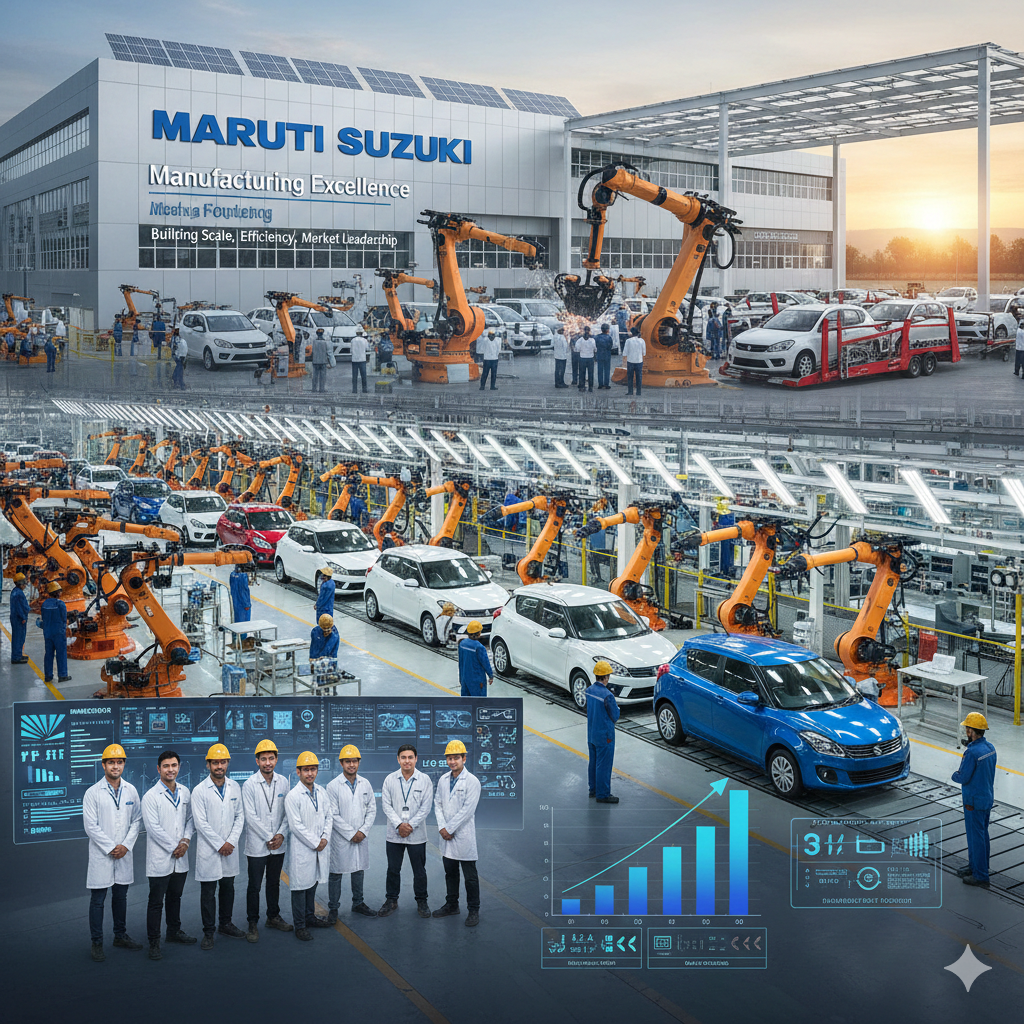
One of the biggest strengths and strong competitive advantages for Maruti Suzuki is its robust supplier ecosystem. The company has nurtured close relationships with hundreds of vendors over the years, situated around its manufacturing plants. This kind of clustering minimizes logistics costs, extends better coordination, and assures faster turnaround times. High levels of localization allow Maruti to reduce its dependence on imports, thus limiting the impact of currency fluctuations as well as disruptions in global supply. Technology sharing, quality training, and long-term contracts are some of the other ways in which the company actively supports these vendors, fostering mutual growth. Many suppliers have risen through the ranks with Maruti, constituting an integrated automotive ecosystem. Stronger backward integration ensures that the company is in a better position to control costs and assure consistent component quality. During the disruptions in the supply chain-for instance, semiconductor shortages-the vendor management systems at Maruti helped cushion the operational impact. Localization has not only improved margins but also strengthened supply chain resilience.
Quality Control, Automation and Ongoing Improvement
Manufacturing capability alone isn’t enough to be considered a leader in the industry; it must also be consistent in order to remain competitive. By integrating the use of automation, robotics and precision engineering into their entire assembly line, Maruti Suzuki can produce vehicles with uniform standards. The introduction of advanced welding robots, fully automated paint shops, and extensive inspection systems have greatly reduced human error while providing greater safety during the assembly process. Even with all of the technology available to manufacturers today, Maruti has been able to maintain their strong culture of ongoing improvement through the implementation of Kaizen practices which allows all employees at each level to make process suggestions for incremental efficiency improvements over time. Maruti conducts rigorous quality audits on a regular basis and maintains real-time monitoring systems to ensure defects are detected as early as possible which will greatly reduce the number of recalls and this will ultimately save the company’s money in terms of rework price. Additionally, this ongoing commitment to quality has helped to increase the trust that customers have in Maruti products and provide them a reputation for reliability. By blending the benefits of automation and human driven improvement, Maruti has developed an efficient and flexible manufacturing system capable of meeting future needs.
Conclusion
Maruti Suzuki’s dominance of the car market is undoubtedly supplemented by its robust foundation in car manufacturing. While operational efficiency leads to better profitability, it’s equally significant as it translates to how well customers react to the brand. As the car market continues to change, Maruti Suzuki’s strength in car manufacturing will continue to remain its competitive edge.