
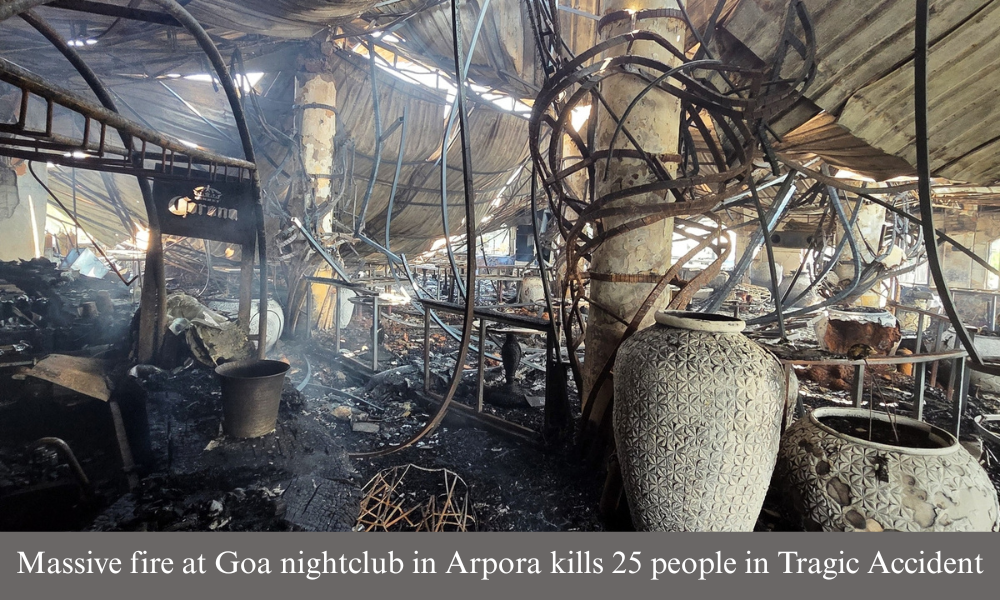
The vibrant nightlife of Goa, known for its energy, music, and youthful spirit, was shattered on a tragic December night when a massive fire engulfed a popular nightclub in Arpora. What should have been an evening of celebration turned into one of the worst fire-related disasters the state has witnessed in recent years. With 25 lives lost and several others injured, the incident has triggered deep sorrow across the nation and renewed discussions about safety standards, accountability, and emergency preparedness in India’s hospitality and entertainment sectors.
A Night of Celebration Turns Into Horror
On the night of the tragedy, the nightclub was hosting a weekend event featuring a well-known DJ, drawing a large crowd of locals and tourists. By late evening, the venue was packed, the music was loud, and the party was in full swing. But around midnight, witnesses reported seeing sparks and flames near the stage area, believed to have originated from faulty lighting equipment or a short circuit—though an official statement is still awaited.
Panic spread quickly as the fire intensified. With thick smoke filling the enclosed space, confusion and chaos followed. Most casualties occurred due to suffocation, as victims struggled to navigate the dark, smoke-filled interiors. The sudden outbreak left people trapped, unable to locate emergency exits or find their way to safety in time.
Slow Response and Limited Exits Worsened the Situation
According to initial investigations, the nightclub had only limited, poorly marked exit routes. Many guests were unfamiliar with the layout, and in low visibility conditions, they found it nearly impossible to escape. Eyewitnesses described scenes of people rushing toward a single exit, causing a stampede-like situation.
Some survivors recalled that the fire spread faster than expected, likely due to flammable decorative materials, furniture, and sound insulation panels commonly used in club interiors. Rescue operations were delayed by the congested area around the club, making it difficult for fire trucks and ambulances to reach the venue promptly.
Firefighters eventually managed to control the blaze, but by then, the damage was already done.
An Avoidable Tragedy?
As authorities began piecing together the sequence of events, questions emerged about whether the tragedy could have been prevented. Early inspections suggested multiple safety lapses:
Possible absence of functional fire alarms inside the building
Insufficient fire exits or exits blocked due to temporary structures
Overcrowding, with the club allegedly hosting more people than its approved capacity
Non-compliant electrical wiring, which is suspected to have sparked the fire
Lack of fire safety drills, leaving staff overwhelmed in emergency situations
Local officials have confirmed that the club’s fire safety certificate was under review, raising concerns about whether it met the necessary compliance standards at the time of the incident.
The Human Cost: Lives Lost and Families Shattered
The loss of 25 lives has left families devastated. Many of the victims were young professionals, tourists, and local party-goers who had come to enjoy a night in one of Goa’s entertainment hotspots. For their families, what began as a regular evening turned into a nightmare.
Several survivors are undergoing treatment for burns and respiratory injuries. Hospitals reported that many people were brought in unconscious due to severe smoke inhalation. Psychiatric support teams have also been deployed to assist the traumatized survivors and families grieving their loved ones.
Nationwide Shock and Calls for Accountability
The tragedy sparked a nationwide conversation about fire safety standards in commercial spaces such as nightclubs, bars, restaurants, and event halls. Safety activists have long warned about lax compliance and inadequate enforcement of fire regulations in many parts of India. This incident has brought those concerns to the forefront again.
Political leaders expressed condolences and demanded swift action. The Goa government announced a high-level inquiry committee to investigate:
The root cause of the fire
Compliance record of the nightclub
Responsibility of owners, managers, and local authorities
Possible negligence or violation of safety norms
Legal action, including arrests of those responsible, is expected once the investigation is complete.
Safety in Nightlife Spaces: A Lesson for the Country
The Arpora nightclub fire highlights systemic challenges faced by entertainment venues across India. Many such establishments operate in densely populated areas with limited space, outdated infrastructure, and overstretched electrical systems. Without strict enforcement and regular inspections, risks escalate.
Experts emphasize several key measures to prevent such tragedies:
Mandatory annual fire safety certification, backed by surprise inspections
Strict monitoring of crowd capacity to prevent overcrowding
Clear labeling of fire exits and ensuring they remain unobstructed
Installation of automatic fire suppression systems, such as sprinklers
Staff training for emergency evacuation and crowd management
Use of fire-resistant materials in interior design and soundproofing
Public awareness, encouraging visitors to identify exits and follow safety rules
These suggestions, if implemented earnestly, can significantly reduce the likelihood of similar disasters in the future.
Impact on Goa’s Tourism and Nightlife Industry
Goa’s tourism industry relies heavily on nightlife attractions, music festivals, and beach parties. A tragedy of this scale will undoubtedly influence public perception and tourist behavior, especially during the peak holiday seasons of December and January.
Authorities have already announced plans to:
Conduct fire safety audits of all nightclubs and bars
Suspend licenses of venues that fail to meet compliance standards
Improve emergency response infrastructure, particularly in tourist-heavy areas
While these measures aim to restore public confidence, the industry may see temporary declines as travelers process the incident.
A Wake-Up Call for the Nation
The Arpora nightclub fire is a painful reminder of the consequences of neglecting safety norms. Beyond the immediate loss of life, such tragedies expose systemic weaknesses that need to be addressed urgently.
Every life lost is a life too many, and this incident underscores the need for stronger regulations, better preparedness, and strict accountability. As families mourn and the nation reflects, the hope is that this tragedy becomes a turning point toward a safer and more responsible nightlife culture across India.
Conclusion
The Goa nightclub tragedy will remain etched in the nation’s memory—not just for the heart-breaking loss of 25 lives, but for the harsh lessons it brings to light. It is a call for action, reform, and stricter enforcement of safety standards. Only by addressing these issues head-on can we prevent such disasters in the future and ensure that places meant for joy and recreation never again become scenes of devastation.






Hi, this is a comment.
To get started with moderating, editing, and deleting comments, please visit the Comments screen in the dashboard.
Commenter avatars come from Gravatar.