
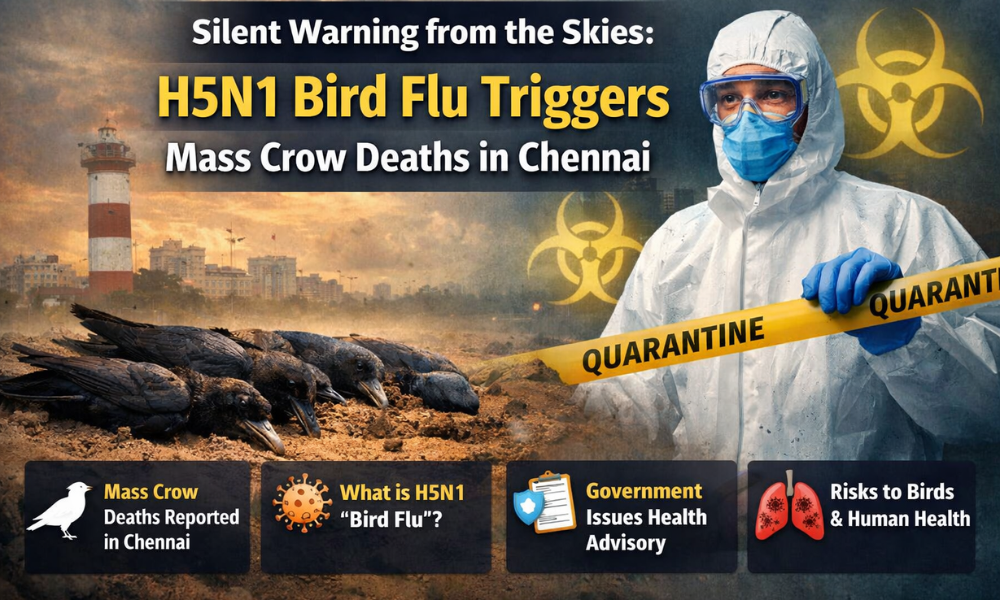
The sudden death of hundreds of crows across Chennai has raised serious concerns, with laboratory tests confirming the presence of the H5N1 avian influenza virus. The incident has prompted health and animal husbandry authorities to issue advisories and step up surveillance efforts across the region. Though H5N1 affects mainly birds, the detection of the virus underlines the need for strict biosafety and awareness among the public. As officials work to contain the spread, the situation has brought into sharp focus how quickly avian diseases can strike the heart of urban India.
Unusual Crow Deaths Across Chennai Raise Alarm
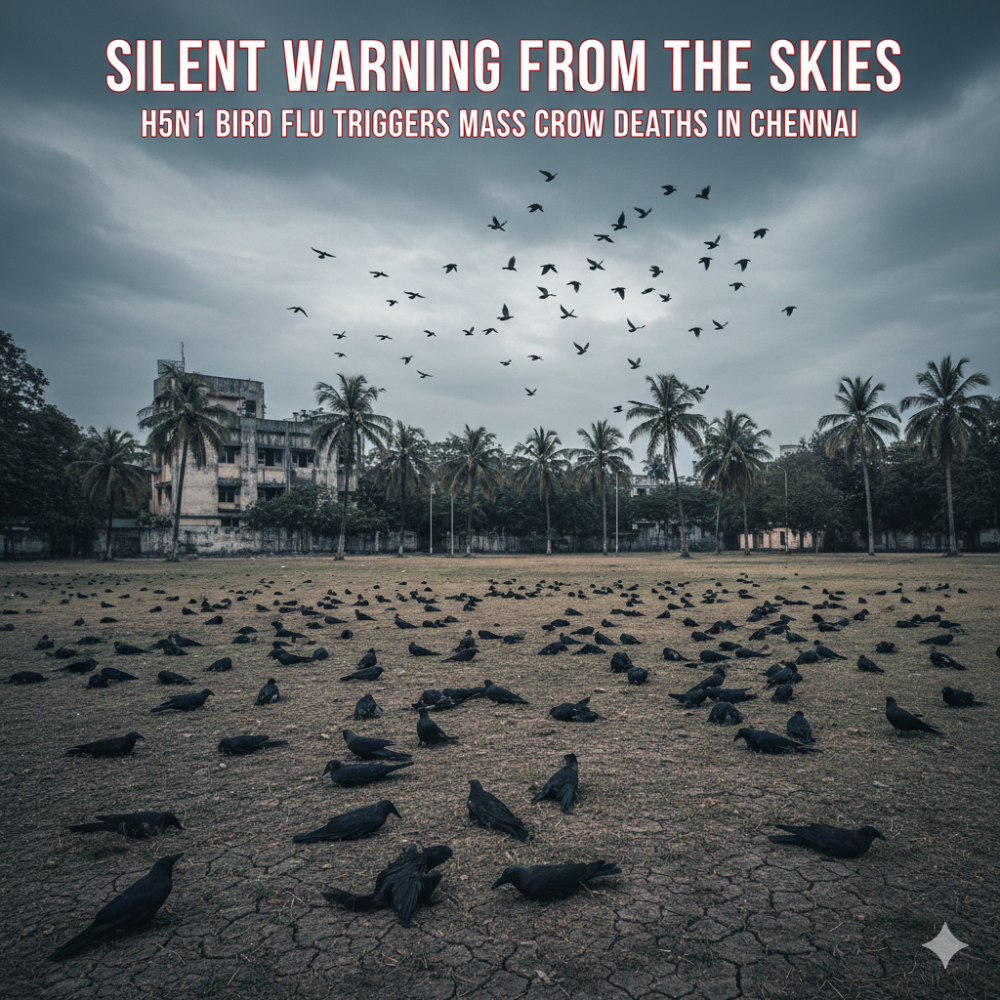
Hundreds of crows were found dead across different locations of Chennai on Friday. This immediately sparked concern across the city. The cause of death, after extensive investigation, was traced to the presence of the H5N1 influenza virus, which is responsible for bird flu. The sudden occurrence of the deaths of hundreds of crows surely serves as a warning sign of the spread of bird flu in the city as crows are the first to show the signs of such a disease. As the situation was identified immediately, the authorities have been taking swift action to spread awareness of the situation, thus taking the necessary steps to contain the disease. This situation has also brought into question the situation of bird flu that can spread within the city, especially as Chennai is facing this unusual occurrence of dead crows. As this is the first unusual occurrence of dead crows, the situation is being effectively dealt with by the authorities to contain the spread of the disease.
H5N1 and Why Is It Known as Bird Flu?
H5n1 is an infectious disease caused by an influenza a virus with high pathogenicity that primarily infects birds, but can infect other animals as well, including humans. H5n1-affected birds can be infected through contact with other infected birds or with contaminated environments. Birds also have high fatality rates when they are infected with h5n1. Therefore, outbreaks of h5n1 are treated as a serious animal health emergency. Once h5n1 starts spreading among birds, containing it is very difficult. By nature, h5n1 will move throughout the population of birds by their two most common methods of transmission, contact with other infected birds or contact with contaminated environments. H5n1 outbreaks are under constant monitoring due to the potential that it may cross species barriers and infect humans.
In addition to monitoring h5n1, authorities enforce very strict biosecurity measures at any location where h5n1 is found in an effort to minimize the spread of h5n1, protect the numbers in the population of birds, and reduce the likelihood that h5n1 will affect humans in areas affected by h5n1.
Public Health Advisory and Government Response Issued
Authorities published an advisory to assist the public in containing the outbreak after H5N1 was confirmed and issued clear direction on how to dispose of crows and poultry: carcasses should be incinerated or buried deep per biosecurity protocols. The public was strongly advised not to touch or handle dead birds under any circumstance; they are to notify the appropriate local authority immediately upon noticing birds that have suddenly died. The Union Ministry for Animal Husbandry wrote directly to the Chief Secretary of the Government of Tamil Nadu regarding the need for immediate and thorough field surveillance in response to this matter. The measures proposed by both the Centre and State government agencies will allow for the rapid identification of additional cases of H5N1 and therefore limit the spread of the virus. Additionally, the coordinated response to date demonstrates the severity of this outbreak and stresses the need for cooperation between all levels of government and the general public to limit the spread of the disease.
What is the Danger Posed by H5N1 to Birds and Humans?
H5N1 is classified as extremely dangerous and is known to spread rapidly among birds, leading to widespread outbreaks. The virus can cause severe disease and high mortality in both poultry and wild birds, causing extreme concern for animal health authorities. Although infections among humans are infrequent, those who do become infected usually develop serious illness; almost all previously documented cases of human infection have included severe respiratory illness, including pneumonia. The fatality rate for these infected humans is significantly greater than the fatality rate for seasonal influenza. Due to the seriousness of these potential negative health effects, public health officials monitor all cases of H5N1, even if reported cases of human infection are rare. To mitigate the risk of human-to-bird transmission of H5N1, public health officials enforce strict biosecurity measures and institute surveillance to protect bird populations from H5N1 while also reducing opportunities for humans to be exposed to the virus.
Conclusion
The confirmation of H5N1 after the mass death of crows in Chennai has brought to light just how serious an outbreak of avian influenza is in an urban setting. While the virus essentially impacts birds, the incident has swiftly made authorities act fast for containment so that public safety is ensured. Advisories, strict disposal protocols, and enhanced field surveillance underline the need for caution and cooperation. The situation serves as a grim reminder that early reporting, public awareness, and adherence to biosecurity measures are important in containing outbreaks like these and minimizing potential risks to animal and human health.