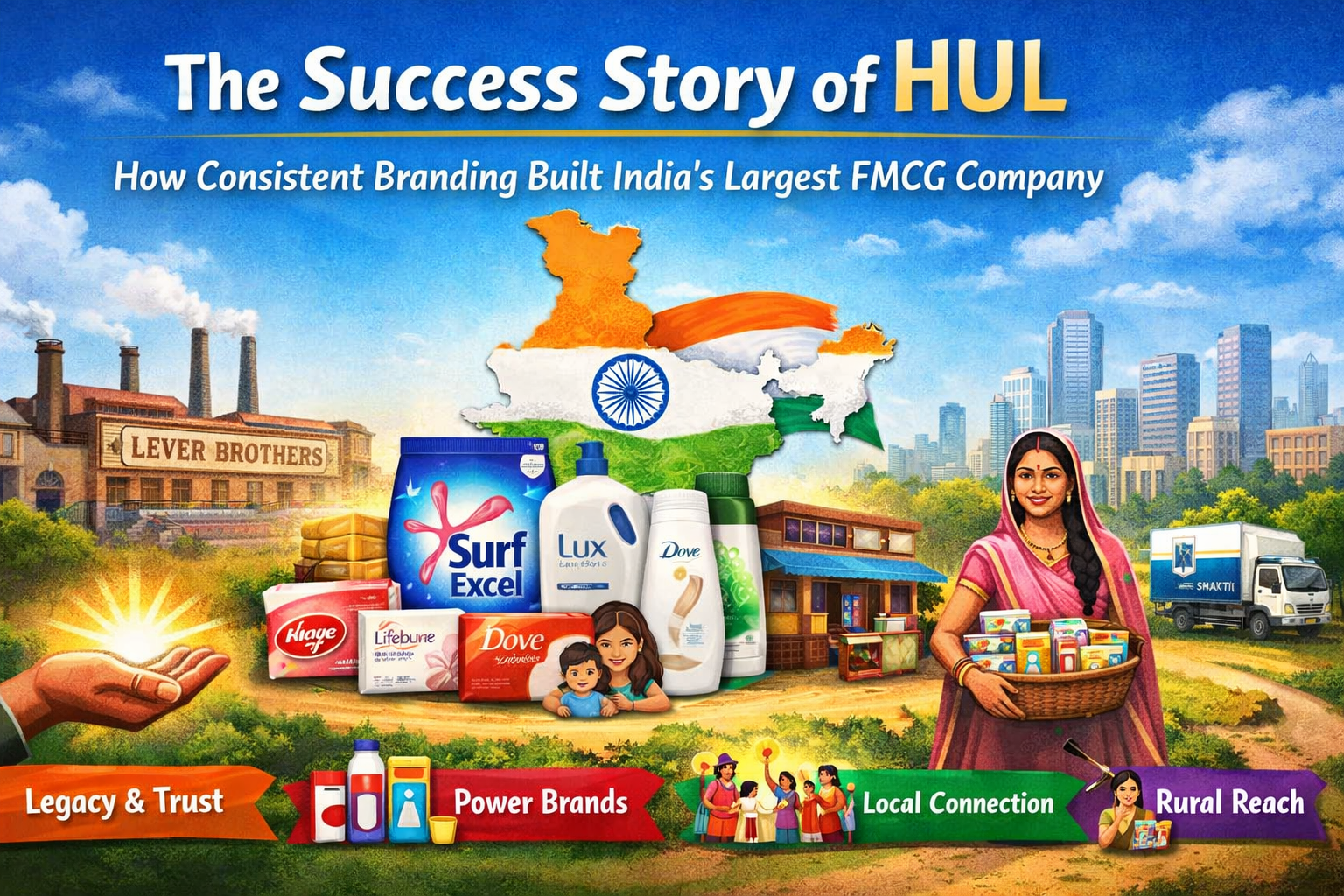
“Hindustan Unilever Limited (HUL)” is more than just India’s leading FMCG enterprise; it is actually a brand that “has quietly become an indispensable part of Indian lives over the past nine decades.” The span of products offered by HUL runs from “soaps and detergents to food and personal care.” However, what actually makes “Hindustan Unilever Limited (HUL)” truly stand out from other enterprises and brands is not actually its massive nature or reach, but rather “the unwavering dedication to quality branding and consumer trust.” This blog actually discusses how this massive iconic enterprise built an unprecedented legacy in the field of FMCG.
From Lever Brothers to HUL: Laying the Foundation of Trust
HUL began its journey in India during the 1930s when Lever Brothers first set foot in that country.
In those years, very few companies were in competition for the ever increasing demand for FMCG products as it was not seen as a competitive landscape. HUL, with its local facilities as well as sourcing materials domestically, positioned itself as a true Indian company and not an imported brand.
As HUL grew in the marketplace, it established itself as a dependable source of affordable FMCG products, and conveyed its commitment to hygiene and quality. HUL’s commitment to affordability, hygiene, and quality were key messages, which connected with Indian households.
For example, Lifebuoy and Lux are not just brands; they are also brands of health and aspiration. HUL continued to have continual communication, and reliable pricing throughout economic downturns which created trust in their consumers. HUL established a level of trust early which built generational loyalty, as families passed down the brand of their choice for decades. HUL established a foundation of trust through their support to the community, through becoming part of their daily routine and social0 fabric. This foundation is still solid today as HUL leads the way in the FMCG industry in India.
Power Brands & Portfolio Strategy: Owning Every Indian Home
Building brands that have power and drive entire categories of products, HUL has been able not to pursue fads and trends. Examples of major product offerings are Surf Excel, Rin, Lux, Dove, Lifebuoy and Fair & Lovely (now known as Glow & Lovely) all have been engineered to serve the specific needs of the consumer at various price points; therefore, allowing HUL to provide range of options to different income groups and preventing brand conflict within its own portfolio. HUL has also maintained the core values of their brands while continuing to improve brand identity over the years to keep them current for today’s consumers to be used by multiple generations. In addition, HUL spends a considerable amount of resources to ensure that the consumer remembers its brands through consistent messaging and mass media. Before developing emotional ties with consumers around issues of caring, confidence and cleanliness, HUL’s brands will be consumed as a matter of course by the consumer daily and will forever have a place as the dominant player in their category among many other FMCG categories at any point in time within Indian homes.
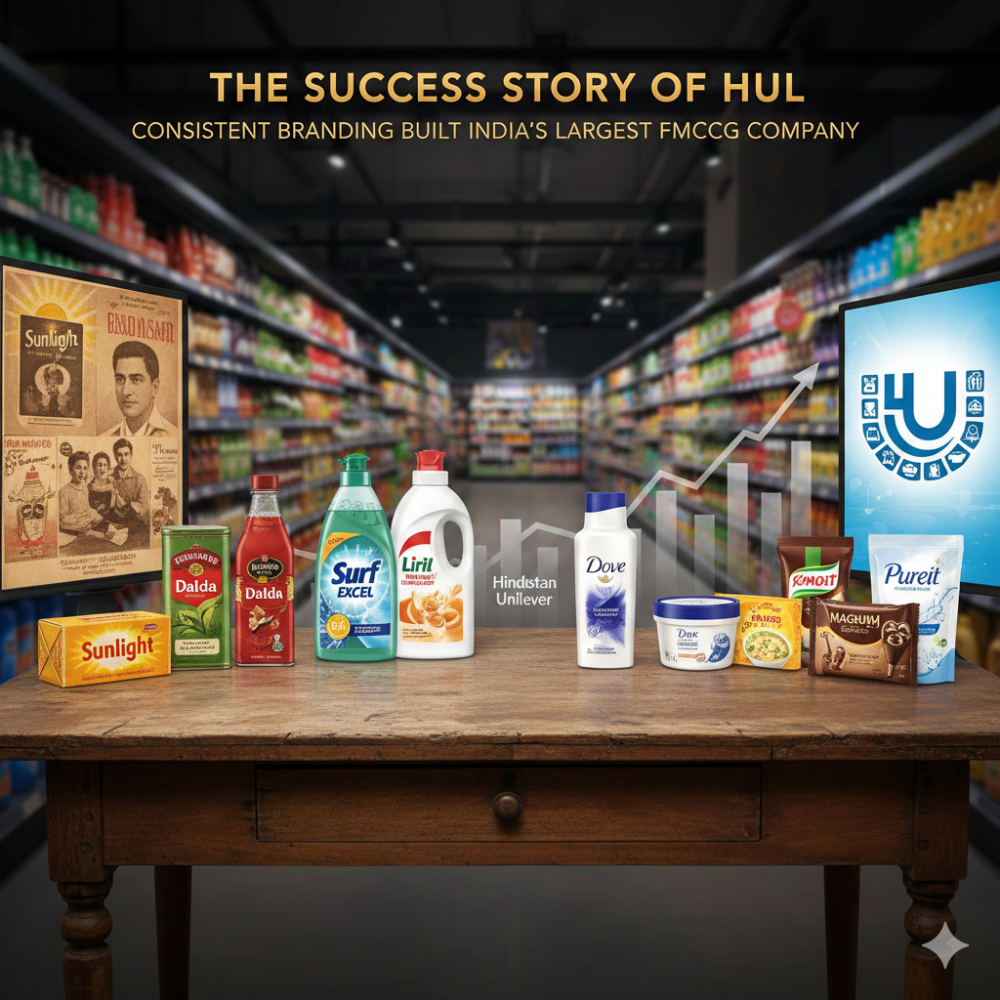
Consistent Branding with Local Relevance
One of the major strengths of HUL is its ability to balance brand messaging and adapt to India’s cultural nuances. Their ad campaigns have been consistently built on various values such as caring, responsible, and progressive, yet at the same time relating to people in India’s culturally diverse environment. Their ad commercials, like Surf Excel’s “Daag Achhe Hain” and Lifebuoy’s hygiene-related commercials, not only resonate with consumers’ emotions but also connect them to the product’s various benefits. Moreover, HUL’s adaptation to different themes and situations, such as women’s empowerment, inclusiveness, and sustainability, over time has helped them balance brand messaging and product communication. Thus, building this relevance and consistency to consumers of different generations has been one of the major reasons HUL has been able to maintain brand consistency.
Distribution, Innovation & Rural Penetration at Scale
The companies competitive edge is attributed to their extensive distribution network in India (urban and rural areas) with millions of retail stores; reaching villages even in the most remote locations. Project Shakti has empowered women entrepreneurs in rural areas and facilitated last-mile delivery. HUL continues to innovate using different packaging options, pricing and formats (sachets) to keep products affordable and accessible to consumers. The data analytics and supply chain technology are tools HUL uses to respond rapidly to demand changes; therefore, most of HUL’s competitors do not have the operational excellence that allows them to achieve the same scale as HUL. This example of operational excellence is one of the reasons HUL is able to maintain consumers’ trust in its products and have them consistently available at every Indian consumer’s location.
Conclusion
The success of HUL in the fast-moving consumer goods (FMCG) sector has shown that true long-term value in this industry can only be gained through building a base of trust with consumers through consistent communication, understanding their needs and maintaining brand integrity. HUL has created some of the most iconic brands in India by creating culturally relevant products, making products readily available and developing a way to be present in Indian society today and tomorrow. By continuing to evolve and meet the needs of consumers while remaining true to its core brand values, HUL continues to set itself apart from its competition. Ultimately, HUL’s success demonstrates that having a strong brand combined with purpose and effective execution at scale will lead not just to establishing themselves as an industry leader but also to establishing an enduring legacy that will carry on for many generations.