
Introduction
Gir National Park and Wildlife Sanctuary, located in southern Gujarat, is not just a protected forest; it is the last natural habitat of the Asiatic lion. Spanning thousands of hectares, Gir is home to a wide range of flora and fauna — from majestic lions to rare birds, reptiles, and smaller mammals. Over the years, the park has faced multiple challenges as the state balances conservation with development and infrastructure needs.
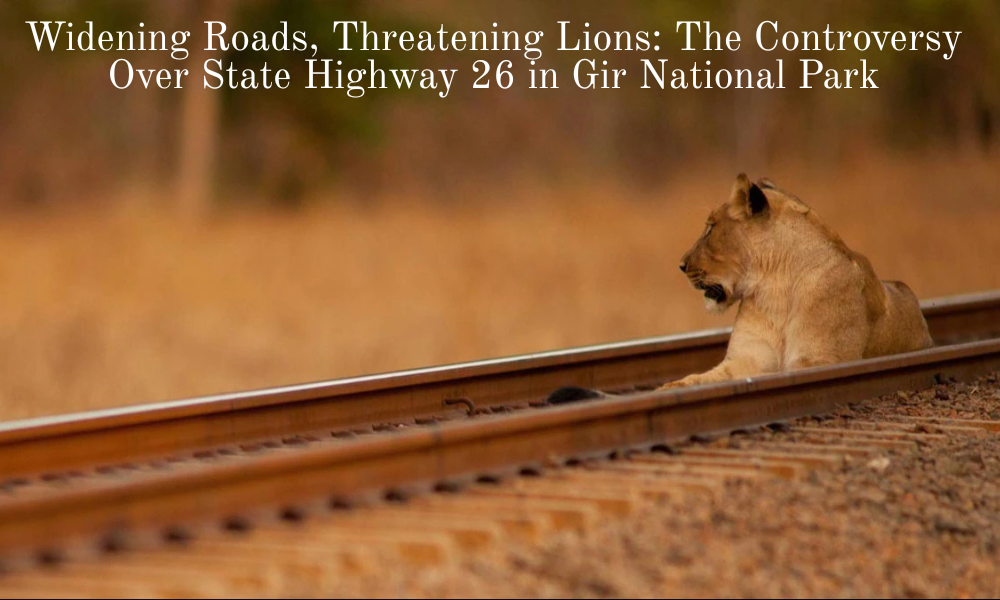
Currently, the Gujarat government’s plan to widen State Highway 26 (SH 26), which cuts through the heart of Gir National Park, has sparked protests and concerns among environmentalists, wildlife activists, and local communities. The widening project, intended to improve connectivity and facilitate transport, threatens the delicate ecosystem of Gir and poses risks to its wildlife corridors.
The Road Widening Plan
The proposal aims to widen a 7-kilometer stretch of SH 26 between Vaniyavav and Sasan, which passes directly through the core area of the sanctuary. The plan includes increasing the road’s width to accommodate more traffic and reduce travel times.
The government has proposed a “land-swap” arrangement, where land outside the sanctuary could replace the forest land used for road widening. However, experts argue that such a swap does not compensate for the loss of critical lion habitat, nor does it preserve the ecological integrity of the park.
Critics also point out that the project has not completed the necessary Environmental Impact Assessment (EIA) and Wildlife Impact Assessment (WIA), which are required by law before any development in protected areas.
Why the Opposition?
Environmentalists and wildlife experts have raised several serious concerns:
- Increased Wildlife Mortality: Widening the road will inevitably lead to higher vehicle speeds, increasing the risk of accidents involving lions, leopards, and other species that use this corridor.
- Fragmentation of the Ecosystem: Gir’s ecosystem is compact and highly sensitive. Breaking through the core forest area may fragment habitats and corridors, disrupting animal movement and breeding patterns.
- Human Interference: More traffic means more noise, pollution, and disturbance to wildlife. It also increases the chances of poaching or illegal entry into protected areas.
- Loss of Biodiversity: The project could harm prey species and reduce the availability of essential forest cover, affecting the entire food chain within the park.
- Long-Term Ecological Imbalance: Once corridors are broken and habitats disturbed, restoring them is extremely difficult. The park could experience lasting damage that affects future generations of wildlife.
Development vs. Conservation
Proponents of the road widening argue that improved infrastructure is necessary for local residents, tourists, and economic development. Better roads can reduce travel times, improve access to services, and support tourism — a major source of revenue for the region.
However, conservationists maintain that development should not come at the cost of endangered wildlife. Lions, being territorial animals, require large contiguous areas to roam. Fragmenting their habitat can lead to conflicts, reduced genetic diversity, and increased mortality.
Previous Interventions
The National Board for Wildlife (NBWL) has previously intervened in similar cases. In past proposals for widening roads in Gir, the NBWL rejected the plan, citing the risk to lion habitats and wildlife corridors. Instead, it recommended strengthening existing roads without disturbing the core sanctuary.
In addition, the forest department has installed wildlife monitoring measures such as thermal cameras, LED signboards, and speed monitoring systems on SH 26 to reduce vehicle collisions with animals. While these measures help, experts warn that widening the road will still significantly increase risks to the wildlife.
Environmental and Scientific Perspectives
Studies from other wildlife corridors in India, such as tiger corridors along NH-44, show that road expansion through critical habitats leads to long-term ecological damage. Mitigation measures like overpasses, underpasses, or wildlife crossings are expensive and often insufficient if corridors are heavily fragmented.
Wildlife scientists stress that land swaps or compensatory measures outside the park cannot replace the ecological value of undisturbed core forest areas. For apex predators like lions, every kilometer of lost habitat can impact territory, reproduction, and population stability.
Possible Alternatives
Experts suggest several alternatives to achieve development goals without endangering wildlife:
- Use alternative routes: Identify nearby roads outside protected areas that can be widened to improve connectivity without cutting through Gir.
- Strengthen existing roads: Instead of widening, enhance the existing SH 26 with maintenance, signage, speed regulation, and monitoring systems.
- Strict regulation and monitoring: If widening is unavoidable, enforce night-time restrictions, strict speed limits, and wildlife monitoring to minimize accidents.
- Public involvement: Engage local communities, conservationists, and tourism stakeholders in decision-making to balance development and ecological sustainability.
- Wildlife crossings: Construct overpasses or underpasses specifically designed for animals to safely cross roads. While costly, this could help reduce mortality and maintain corridor connectivity.
The Broader Implications
The controversy over SH 26 reflects a larger struggle between infrastructure development and environmental conservation in India. As urbanization and tourism increase, conflicts over land use will become more frequent. Gir National Park serves as a critical reminder that protected areas cannot be treated as obstacles to progress; they are invaluable ecological assets that require careful management.
The outcome of this project will have implications not just for Gujarat but for wildlife conservation policy across India. It raises important questions:
- Can development coexist with conservation in India’s protected areas?
- How do we prioritize human needs without compromising endangered species?
- What role should scientific assessment and environmental governance play in such projects?
Conclusion
Gir National Park is more than just a forest; it is a sanctuary that embodies India’s commitment to wildlife conservation. The widening of State Highway 26 through the heart of the park is not merely a road project — it is a test of how India balances infrastructure growth with ecological responsibility.
If carried out without proper assessments, the project could jeopardize lion populations, fragment habitats, and disrupt the ecosystem. Conversely, transparent planning, stakeholder involvement, and mitigation measures could demonstrate that development and conservation are not mutually exclusive.
The debate over SH 26 serves as a powerful reminder: true progress lies not in expanding concrete highways through forests but in fostering coexistence between humans and nature. How Gujarat addresses this challenge will set a precedent for wildlife conservation and sustainable development for years to come.